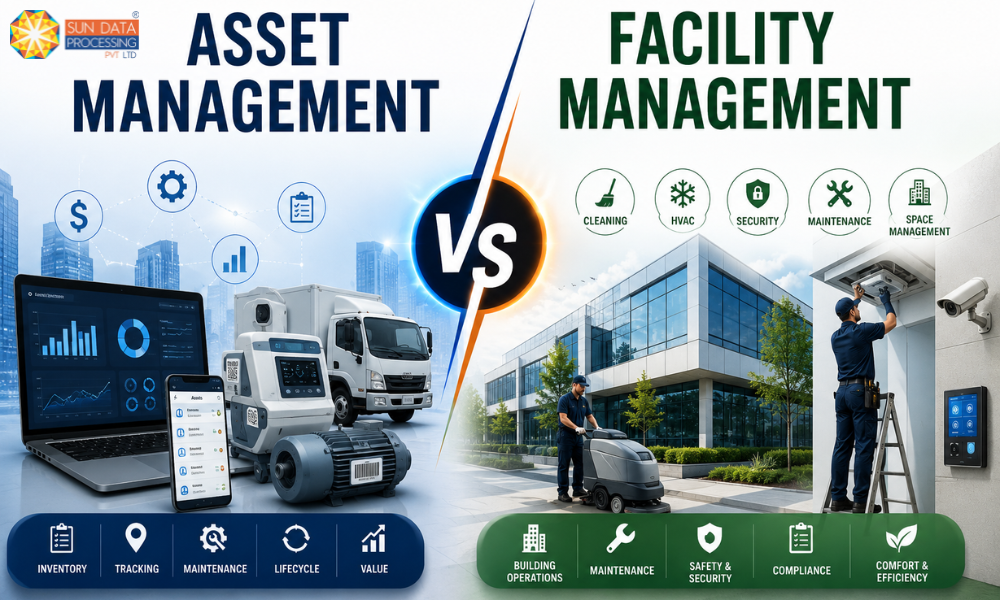
Every business depends on its assets, facilities, and equipment to keep daily operations running smoothly. Machines, computers, office buildings, vehicles, and other resources all need proper planning and regular maintenance. Without a clear system, businesses can face higher costs, unexpected breakdowns, and reduced productivity.
Many people think asset management vs facility management means the same thing, but they serve different purposes. Asset management focuses on tracking, maintaining, and improving the value of business assets throughout their lifecycle. Facility management looks after the workplace, buildings, and services that support employees and business operations.
Understanding the difference between facility management vs asset management helps businesses choose the right approach based on their needs. This guide explains both concepts, their benefits, key differences, and how they work together to improve business performance.
What is Asset Management?
Asset management is the process of tracking, maintaining, and managing physical assets throughout their lifecycle. It helps businesses know what assets they own, where they are located, how they are performing, and when they need maintenance or replacement.
Assets can include machinery, computers, vehicles, tools, medical equipment, office furniture, and other valuable business resources. A proper asset management system keeps accurate records and helps businesses use these assets efficiently.
The main goal of asset management is to increase the value of assets while reducing maintenance costs, downtime, and unnecessary purchases. It also helps businesses make better decisions based on real-time asset information.
Core Elements of Asset Management
Every asset management process is built on a few important activities that keep business assets organized and in good condition.
Asset Tracking
Every asset is assigned a unique identity using barcodes, QR codes, or RFID tags. This makes it easy to know the exact location and status of each asset.
Asset Lifecycle Management
Each asset is managed from the time it is purchased until it is retired or replaced. This helps businesses plan maintenance, upgrades, and replacements at the right time.
Preventive Maintenance
Regular maintenance keeps equipment in good working condition. Scheduled servicing reduces unexpected failures and increases the life of valuable assets.
Asset Performance Monitoring
Businesses can monitor how assets are being used and measure their performance. This information helps identify underused or poorly performing assets.
Asset Data and Reporting
A centralized system stores all asset information, including purchase details, maintenance history, warranty records, and usage reports. This improves planning and decision-making.
Common Types of Asset Management
Businesses manage different kinds of assets based on their industry and daily operations. Each type has its own purpose and management process.
Physical Asset Management
Physical asset management focuses on equipment, machinery, vehicles, tools, office furniture, and other tangible assets. It helps businesses monitor asset usage, maintenance schedules, and overall condition to increase their lifespan.
IT Asset Management
IT asset management is used to manage computers, laptops, servers, printers, software licenses, and network devices. It helps organizations keep track of hardware and software while ensuring compliance and reducing unnecessary IT expenses.
Infrastructure Asset Management
Infrastructure asset management deals with roads, bridges, utility systems, power plants, pipelines, and other public or industrial infrastructure. Regular inspections and maintenance help keep these assets safe and operational.
Enterprise Asset Management (EAM)
Enterprise Asset Management combines asset tracking, maintenance planning, work orders, and reporting into one system. Large organizations use EAM to manage assets across multiple departments and locations from a single platform.
Digital Asset Management
Digital asset management is used for files such as images, videos, documents, presentations, and marketing materials. It helps teams organize, store, and quickly access digital content whenever needed.
Benefits of Asset Management
A well-managed asset system helps businesses reduce costs, improve productivity, and make better business decisions. Some of the major benefits include:
Better Asset Visibility
Asset management gives businesses complete visibility into all their assets from one centralized system. Teams can easily track asset locations, monitor their condition, and check their availability in real time. This reduces the chances of misplaced assets and helps improve planning for daily operations.
Lower Maintenance Costs
Regular maintenance schedules help identify issues before they become major problems. This reduces expensive repairs, prevents unexpected equipment failures, and extends the working life of valuable assets. Businesses can also avoid unnecessary maintenance expenses by servicing assets at the right time.
Improved Asset Utilization
Asset management helps businesses understand how assets are being used across different departments and locations. Managers can identify underused equipment, allocate resources more effectively, and avoid purchasing duplicate assets. This leads to better use of existing investments and improved operational efficiency.
Better Decision Making
Accurate asset records provide valuable information about maintenance history, asset performance, warranty details, and lifecycle costs. This data helps businesses make informed decisions about repairs, replacements, future investments, and budget planning, reducing unnecessary spending.
Reduced Downtime and Higher Productivity
Well-maintained assets are less likely to break down during daily operations. Preventive maintenance and regular monitoring keep equipment running efficiently, allowing employees to work without interruptions. This improves productivity, reduces delays, and supports smooth business operations.
What is Facility Management?
Facility management is the process of managing and maintaining a building, workplace, and the services needed to keep business operations running smoothly. It focuses on creating a safe, comfortable, and efficient environment for employees, customers, and visitors.
Facility management covers both the physical infrastructure and the day-to-day operations of a workplace. This includes building maintenance, cleaning, security, space management, utility services, and workplace safety. A well-managed facility helps reduce operational issues and improves the overall work environment.
The main goal of facility management is to ensure that buildings and facilities remain functional, safe, and cost-effective. It also helps businesses improve employee productivity, meet safety standards, and make the best use of available space.
Core Elements of Facility Management
Facility management includes several important functions that help businesses maintain their buildings and support daily operations.
Building Maintenance
Regular inspection and maintenance of electrical systems, plumbing, HVAC, elevators, lighting, and other building infrastructure help prevent unexpected problems and keep facilities operating efficiently.
Space Management
Proper space planning helps businesses use office areas, meeting rooms, warehouses, and workstations effectively. It supports better resource utilization and provides employees with a comfortable working environment.
Health and Safety Management
Facility managers ensure that the workplace follows safety regulations and industry standards. Fire safety systems, emergency exits, risk assessments, and regular inspections help create a safe environment for everyone.
Security Management
Security services include access control, CCTV monitoring, visitor management, and emergency response planning. These measures help protect employees, business assets, and company property.
Utility and Support Services
Facility management also covers services such as housekeeping, waste management, landscaping, parking management, water supply, and energy management. These services keep the workplace clean, organized, and ready for daily operations.
Common Types of Facility Management
Different businesses require different facility management services depending on their industry, building size, and operational needs. Below are some of the most common types of facility management.
Hard Facility Management
Hard facility management covers the physical infrastructure of a building that is essential for daily operations. It includes maintaining electrical systems, plumbing, HVAC systems, elevators, fire safety equipment, and other building services. Regular maintenance keeps these systems safe, reliable, and compliant with regulations.
Soft Facility Management
Soft facility management focuses on services that improve the workplace environment. These services include housekeeping, security, pest control, waste management, landscaping, catering, and reception management. They help create a clean, safe, and comfortable workplace for employees and visitors.
Workplace Facility Management
Workplace facility management is responsible for making the best use of office space and supporting employees with the resources they need. It includes space planning, meeting room management, seating arrangements, visitor management, and workplace support services to improve daily operations.
Industrial Facility Management
Industrial facility management is used in manufacturing plants, warehouses, factories, and production units. It focuses on maintaining industrial equipment, production facilities, utilities, and safety systems to ensure smooth and uninterrupted operations.
Integrated Facility Management (IFM)
Integrated Facility Management combines multiple facility services under a single management system. Businesses can manage maintenance, cleaning, security, energy management, and workplace services through one provider, making operations more efficient and easier to control.
Benefits of Facility Management
A well-managed facility supports smooth business operations by keeping the workplace safe, organized, and efficient. It also helps businesses reduce operating costs, improve employee satisfaction, and maintain a productive working environment.
Improved Workplace Safety
Facility management helps businesses maintain a safe working environment through regular inspections, fire safety checks, security measures, and compliance with workplace regulations. A safe facility reduces risks, protects employees and visitors, and supports uninterrupted business operations.
Better Space Utilization
Proper planning allows businesses to make the best use of available office and facility space. Teams can organize workstations, meeting rooms, and common areas more efficiently, creating a comfortable workplace while avoiding unnecessary expansion costs.
Lower Operating Costs
Routine maintenance and efficient management of utilities, equipment, and building services help reduce operating expenses. Early identification of maintenance issues prevents costly repairs and allows businesses to manage their facility budget more effectively.
Increased Employee Productivity
A clean, organized, and well-maintained workplace allows employees to focus on their work without unnecessary interruptions. Comfortable working conditions, reliable facilities, and proper support services contribute to higher productivity and improved employee satisfaction.
Better Business Continuity
Facility management helps keep buildings, equipment, and essential services running smoothly every day. Regular maintenance and planned inspections reduce unexpected disruptions, allowing businesses to continue operations with minimal downtime and maintain consistent service quality.
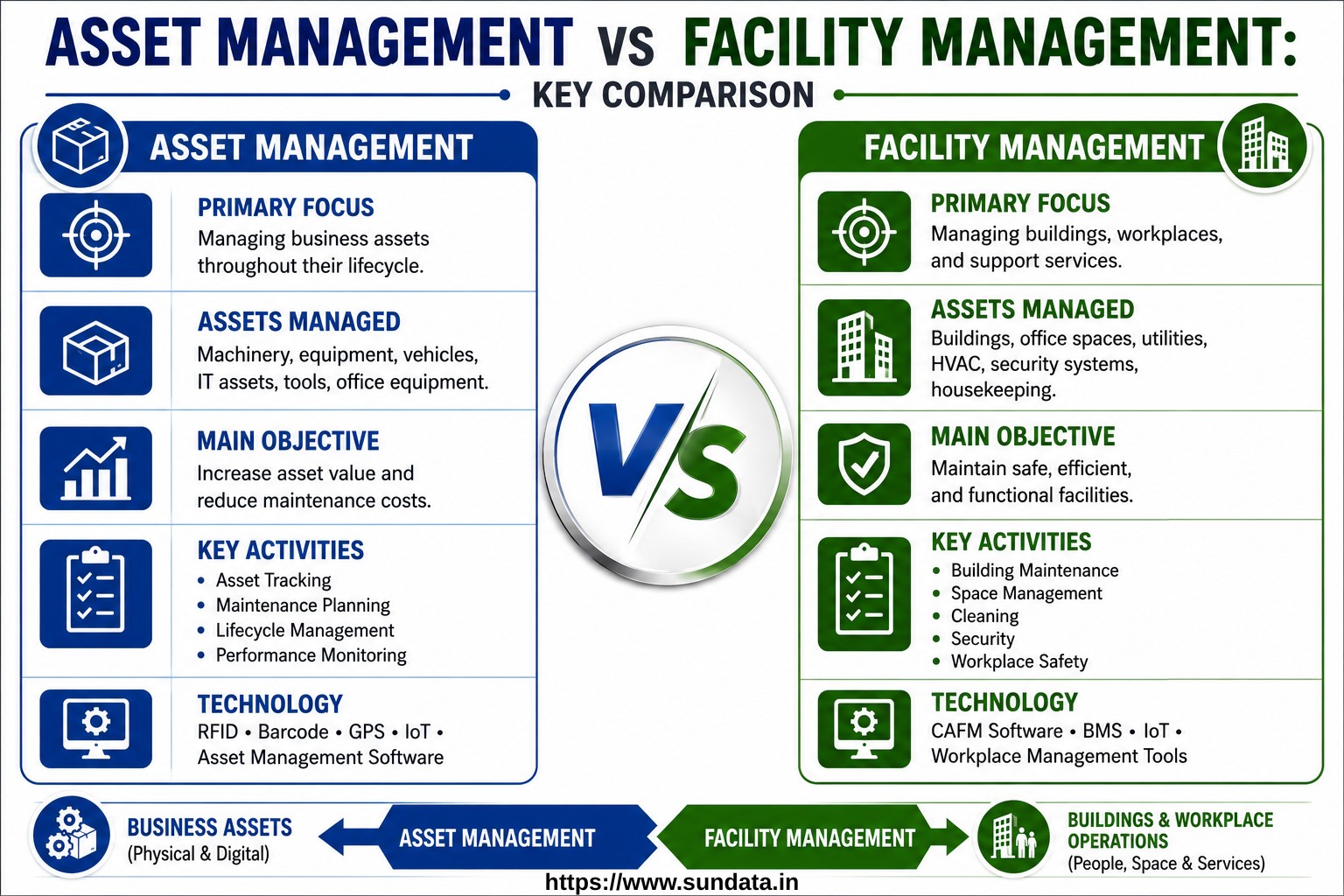
Asset Management vs Facility Management: Key Comparison
Asset management and facility management are closely connected, but they have different responsibilities. Understanding these differences helps businesses choose the right solution based on their operational goals and long-term requirements.
Purpose
Asset management focuses on maximizing the value and performance of business assets throughout their lifecycle. Facility management focuses on maintaining buildings, workspaces, and essential services that support daily business operations.
Scope
Asset management deals with equipment, machinery, vehicles, IT assets, and other business resources. Facility management covers office buildings, warehouses, utilities, security, cleaning services, and workplace infrastructure.
Primary Goal
The main goal of asset management is to improve asset utilization, reduce maintenance costs, and extend asset life. Facility management aims to provide a safe, comfortable, and efficient workplace for employees and visitors.
Daily Activities
Asset management includes asset tracking, preventive maintenance, lifecycle management, inspections, and performance monitoring. Facility management involves building maintenance, space planning, housekeeping, security, energy management, and workplace safety.
Technology Used
Asset management commonly uses Asset Management Software, RFID, barcode systems, GPS, and IoT devices for tracking and monitoring assets. Facility management uses CAFM software, Building Management Systems (BMS), IoT solutions, and workplace management tools.
Business Value
Asset management helps businesses improve equipment performance, reduce downtime, and make informed investment decisions. Facility management improves workplace efficiency, lowers operating costs, and creates a better environment for employees.
The table below highlights the major differences between the two.
How Asset Management and Facility Management Work Together
Asset management and facility management support different parts of a business, but they work best when they are connected. Asset management focuses on keeping equipment, machinery, vehicles, and other business assets in good condition. Facility management ensures that buildings, workspaces, utilities, and support services are properly maintained. When both functions work together, businesses can improve efficiency, reduce costs, and avoid operational disruptions.
A good example is a manufacturing company. Asset management keeps production machines running through regular inspections and preventive maintenance. At the same time, facility management ensures the factory has reliable electricity, proper ventilation, lighting, and a safe working environment. If either one is neglected, production can slow down or stop completely.
Both teams also share important information to plan maintenance activities. Asset managers can schedule equipment servicing, while facility managers arrange access, utilities, and workspace support. This coordination reduces downtime, improves resource utilization, and helps maintenance work happen without interrupting daily operations.
Working together also helps businesses make better decisions. Asset performance data, maintenance records, and facility reports provide a complete picture of business operations. Managers can use this information to plan budgets, replace aging equipment, improve workplace safety, and increase the overall efficiency of the organization.
When Does Your Business Need Asset Management?
Every business that owns valuable equipment or physical assets can benefit from asset management. As the number of assets grows, tracking their location, condition, maintenance history, and performance becomes more challenging. An asset management system helps businesses stay organized and make better use of their resources.
Businesses should consider asset management when they frequently face equipment breakdowns, misplaced assets, rising maintenance costs, or difficulty tracking asset usage. A centralized system provides complete visibility into assets and helps improve planning for maintenance and replacements.
Asset management is also important for organizations operating across multiple locations. It allows businesses to monitor assets from one platform, reduce manual work, and make informed decisions using accurate asset data.
When Does Your Business Need Facility Management?
Facility management becomes important when businesses need to maintain buildings, workspaces, and essential services that support daily operations. As offices, factories, warehouses, hospitals, or commercial buildings grow, managing them manually becomes difficult. A facility management system helps businesses maintain building infrastructure, improve workplace safety, manage utilities, and ensure employees have a comfortable working environment. It also supports regular maintenance and helps reduce unexpected operational issues.
Businesses with multiple facilities or large workspaces can benefit from centralized facility management. It improves coordination, reduces operating costs, and keeps buildings functioning efficiently.
How Sundata Helps Businesses Manage Assets Efficiently
Managing business assets becomes more challenging as operations grow. Sundata provides an intelligent asset management solution that helps businesses track, monitor, and maintain assets from a single platform. With real-time visibility and automated processes, organizations can reduce manual work and make better operational decisions.
The solution helps businesses manage the complete asset lifecycle, from procurement and deployment to maintenance and retirement. It keeps accurate asset records, schedules preventive maintenance, and provides detailed reports that help reduce downtime and improve asset performance.
Sundata supports technologies such as RFID, barcode, QR code, and mobile-based asset tracking, making it easier to identify and locate assets quickly. Businesses can monitor asset movement, track maintenance history, and receive timely alerts for inspections and servicing.
Whether you operate in manufacturing, healthcare, education, logistics, retail, or corporate offices, Sundata helps improve asset utilization, reduce maintenance costs, and increase operational efficiency. With centralized asset data and real-time reporting, businesses can make informed decisions and manage their assets with confidence.
FAQ
1. Can asset management and facility management work together?
Yes. Both work together to improve efficiency, reduce downtime, and support smooth business operations.
2. Which businesses need asset management?
Any business that manages equipment, machinery, IT assets, or valuable tools can benefit from asset management.
3. Which industries use facility management?
Facility management is widely used in offices, hospitals, factories, warehouses, educational institutions, retail stores, and commercial buildings.
4. How does asset management software help businesses?
It helps track assets, schedule maintenance, reduce downtime, improve asset utilization, and maintain accurate records from one platform.
5. Does Sundata provide asset management solutions?
Yes. Sundata offers asset management solutions that help businesses track assets, automate maintenance, and improve operational efficiency through a centralized platform.
Conclusion
Asset management and facility management play different but equally important roles in business operations. Asset management focuses on improving the performance, maintenance, and lifecycle of business assets, while facility management ensures that buildings and workplaces remain safe, functional, and efficient. Understanding the difference between asset management vs facility management helps businesses choose the right solution based on their operational needs. In many cases, combining both approaches delivers better control, lower operating costs, and improved productivity.
If your business is looking for a reliable way to manage assets, reduce downtime, and improve operational efficiency, Sundata offers smart asset management solutions designed to simplify asset tracking, maintenance, and lifecycle management from a single platform.
