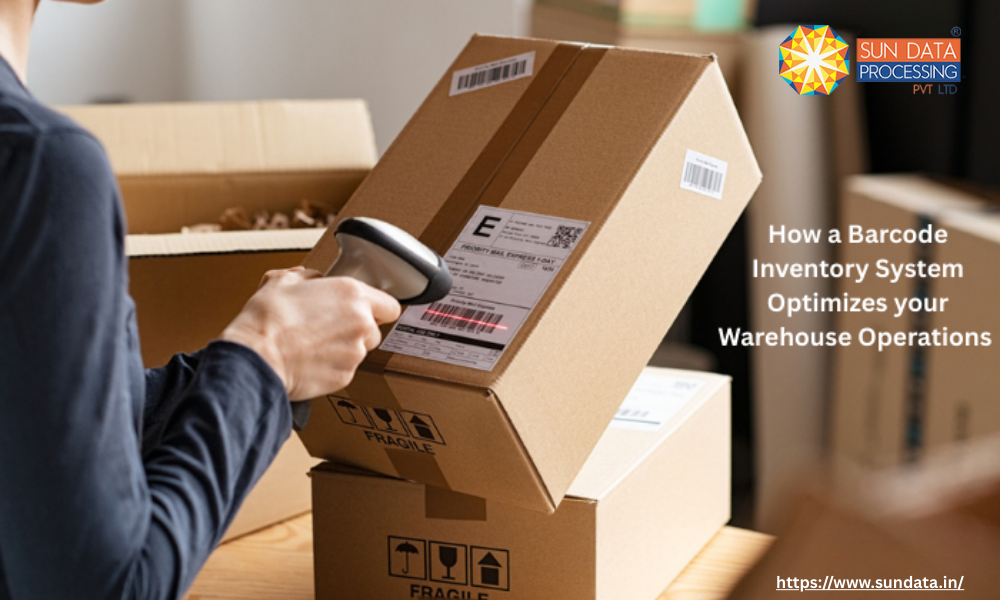
Warehouses are the backbone of supply chains, responsible for storing, tracking, and moving goods efficiently. As order volumes increase and customer expectations rise, businesses can no longer rely on manual stock management methods. Traditional processes like paper-based tracking or spreadsheets often result in misplaced items, inaccurate counts, and delays in order fulfillment.
A barcode inventory system helps overcome these challenges by offering a reliable and cost-effective way to manage warehouse operations. By using barcode labels and scanners, businesses can quickly record product information, track movement, and maintain accurate stock levels. This not only reduces errors but also improves efficiency, saves time, and ensures that inventory data is always up to date.
In the sections ahead, we will look at how barcode inventory systems work, the industries that benefit from them, and why they have become an essential tool for modern warehouse management.
What is an Inventory Control System?
An inventory control system is a structured method used by businesses to manage the flow of goods within a warehouse or storage facility. It ensures that products are available in the right quantity, at the right time, and in the correct location. By tracking every stage of the inventory lifecycle from receiving goods from suppliers to storing them and fulfilling customer orders businesses can minimize errors, reduce stockouts, and avoid overstocking.
Modern inventory control systems often integrate with technologies such as barcodes, RFID, and warehouse management software. This integration provides real-time visibility of stock levels, helping managers make informed decisions, optimize warehouse space, and streamline daily operations. Overall, a reliable inventory control system forms the backbone of efficient warehouse management, improving accuracy, reducing costs, and ensuring smooth supply chain operations.
What is a Barcode Inventory System in a Warehouse?
A barcode inventory system is a method of tracking and managing warehouse stock using barcode labels and scanning devices. Each product in the warehouse is assigned a unique barcode, which contains essential information such as product ID, description, batch number, and location. By scanning these barcodes, warehouse staff can quickly record movement, update stock levels, and access product details in real time.
Unlike manual tracking methods, barcode inventory systems reduce human error, speed up operations, and provide accurate records of all inventory activities. They also allow managers to monitor stock levels, track order fulfillment, and maintain organized storage, ensuring that products are easy to locate and ready for dispatch whenever needed. This system has become an essential tool for warehouses of all sizes, enabling efficient operations and better control over inventory.
How Does a Barcode Inventory System Work?
A barcode inventory system operates through a simple yet effective process. First, each product in the warehouse is assigned a unique barcode label. This barcode contains critical information such as product ID, description, and location. When goods are received, moved, or shipped, warehouse staff scan the barcode using handheld scanners or mobile devices, instantly updating the inventory system.
The scanned data is recorded in the warehouse management software, providing real-time visibility of stock levels, movement history, and storage locations. This process eliminates manual data entry errors, speeds up order processing, and ensures accurate reporting. By integrating barcodes with inventory software, warehouses can efficiently track every product from arrival to dispatch, improving operational efficiency and reducing costly mistakes.
Which Industries Use Inventory Systems?
Inventory systems are widely used across multiple industries where efficient stock management is critical. Retail businesses rely on these systems to track products on shelves and in storage, ensuring they can meet customer demand without overstocking. Manufacturing companies use inventory systems to monitor raw materials, work-in-progress items, and finished goods, helping streamline production schedules and reduce waste.
Other industries such as logistics, e-commerce, pharmaceuticals, and food & beverage also benefit from inventory systems. In logistics and warehousing, accurate tracking ensures timely deliveries and reduces misplaced shipments. In pharmaceuticals and food, inventory systems help maintain compliance, monitor expiry dates, and manage batch tracking. Essentially, any industry that deals with physical products can improve efficiency, accuracy, and operational control through an inventory system.
Why Use Barcodes in a Warehouse?
Using barcodes in a warehouse management system simplifies inventory management by providing a fast, accurate, and reliable method to track products. Instead of manually recording stock data, employees can scan barcodes to instantly update inventory levels, reducing the risk of human error. This ensures that warehouse records are always up to date and accurate.
Barcodes also improve operational efficiency. They help locate items quickly, speed up order picking and packing, and streamline shipping processes. Additionally, barcodes support better decision-making by providing real-time data on stock levels, movement trends, and order fulfillment. For warehouses of any size, implementing a barcode system enhances productivity, lowers costs, and ensures smooth day-to-day operations.
Benefits of Barcode Inventory Systems
Implementing a barcode inventory system transforms warehouse operations by improving accuracy, efficiency, and overall control over stock management. Here’s a closer look at its key benefits:
Improved Accuracy
Manual inventory tracking often leads to errors such as miscounts, misplaced items, or incorrect shipments. Barcode systems automate data entry, ensuring every product movement whether receiving, transferring, or shipping is accurately recorded. This level of precision reduces costly mistakes, prevents stock discrepancies, and helps maintain reliable records for audits and reporting.
Faster Warehouse Operations
Barcode scanning significantly speeds up routine tasks. Warehouse staff can quickly scan items during receiving, picking, packing, and shipping, eliminating the time-consuming process of manual logging. Faster operations mean higher throughput, allowing warehouses to handle larger order volumes without increasing workforce size. This efficiency also reduces bottlenecks and ensures orders are fulfilled on time.
Real-Time Inventory Tracking
With barcode systems integrated into warehouse management software, inventory data is updated in real time. Managers can instantly view stock levels, track product locations, and monitor movement trends. Real-time tracking helps prevent stockouts or overstock situations, optimize reorder schedules, and maintain smooth supply chain operations.
Cost Savings
Automating inventory processes reduces labor costs and minimizes losses from misplaced, damaged, or expired items. Efficient inventory tracking also allows for better space utilization, reducing the need for excess storage. Overall, barcode systems help warehouses operate more cost-effectively while maintaining higher accuracy and reliability.
Data-Driven Decision Making
Accurate and up-to-date inventory data enables managers to make informed decisions about procurement, storage layout, and workflow optimization. Analytics from barcode systems can highlight slow-moving items, peak operational periods, and inefficiencies in processes, allowing warehouses to continuously improve operations.
Enhanced Customer Satisfaction
Accurate inventory and faster order processing directly impact customer experience. Products are shipped correctly and on time, which increases reliability and trust. For businesses, this translates into repeat orders, better reputation, and stronger relationships with clients and partners.
How to Set Up a Barcode Inventory System for the Warehouse?
Setting up a barcode inventory system in a warehouse requires careful planning and the right combination of hardware, software, and processes. Proper implementation ensures smooth operations and maximum efficiency.
Assess Warehouse Needs
Before implementing a barcode system, evaluate your warehouse operations. Identify the types of products, storage layout, order volumes, and current inventory challenges. Understanding your specific needs helps select the appropriate barcode technology and software.
Choose the Right Barcode Types
Different barcode types serve different purposes. Common options for warehouses include Code 128, Code 39, and QR codes. The choice depends on product size, information requirements, and scanning environment. Durable labels that withstand handling, temperature changes, and moisture are crucial for warehouse conditions.
Select Scanning Devices
Decide on the scanning hardware that fits your workflow. Options include handheld scanners, mobile computers, and fixed-mount scanners. Devices should be compatible with your warehouse management software and capable of reading the selected barcode types efficiently.
Implement Inventory Management Software
Integrate barcode scanning with inventory or warehouse management software. This software records scanned data, updates stock levels in real time, tracks movement, and generates reports. Ensure the software supports reporting, alerts for low stock, and integration with other business systems.
Label and Organize Products
Assign barcodes to all products and storage locations. Ensure labels are clearly visible and placed consistently. Organize items logically by category, location, or SKU to simplify scanning and retrieval processes.
Train Warehouse Staff
Proper training ensures staff understand how to scan items, update records, and handle exceptions. Regular training sessions help maintain consistency, minimize errors, and ensure smooth day-to-day operations.
Test and Monitor the System
Before full deployment, conduct a pilot test to identify issues with scanning, labeling, or software integration. Monitor performance regularly and make adjustments to optimize accuracy and efficiency.
By following these steps, warehouses can implement a barcode system that improves accuracy, speeds up operations, and provides real-time visibility of inventory.
What are the Barcode Standards for Warehouses?
Barcode standards are established guidelines that ensure barcodes are readable, consistent, and compatible across industries and systems. In warehouses, following these standards is essential for smooth operations and interoperability with suppliers, logistics partners, and customers.
GS1 Standards
The GS1 standard is the most widely recognized system for barcodes worldwide. It defines how product information is encoded into barcodes so they can be universally scanned and understood. GS1-compliant barcodes ensure consistency across supply chains, from manufacturers to retailers.
Commonly Used Barcode Formats
- UPC (Universal Product Code): Widely used in retail, particularly in North America.
- EAN (European Article Number): Standard for international retail operations.
- Code 128: Common in warehouses for labeling pallets, cartons, and individual items due to its ability to store more data.
- Code 39: Often used for non-retail inventory management and internal tracking.
Labeling and Placement Guidelines
Standards also define where barcodes should be placed for optimal scanning. Labels must be printed clearly, positioned consistently, and resistant to damage from handling, moisture, or environmental conditions in the warehouse.
Compliance and Interoperability
Following barcode standards ensures that warehouses can seamlessly exchange information with trading partners. It also reduces errors in scanning, prevents delays in shipments, and supports better tracking across the entire supply chain.
Adhering to these standards helps warehouses maintain reliability, streamline processes, and achieve global compatibility in inventory management.
What is the Best Barcode for a Warehouse?
The best barcode for a warehouse depends on the type of products, the amount of data to be stored, and the scanning environment. While multiple formats are available, some barcodes are more suitable for warehouse operations than others.
Code 128
Code 128 is one of the most commonly used barcodes in warehouses. It can encode a large amount of information such as serial numbers, batch numbers, and product details within a compact design. Its high data capacity makes it ideal for labeling pallets, cartons, and individual items.
Code 39
Code 39 is another popular choice for warehouse inventory management. It can encode both numbers and letters, making it versatile for internal tracking and asset management. Although it stores less data compared to Code 128, it is simpler to print and scan.
QR Codes
For warehouses that need to store more detailed information or enable quick access to digital records, QR codes can be used. They can hold significantly more data than linear barcodes and are easy to scan with mobile devices.
However, they are less common in traditional warehouse settings compared to linear codes.
Choosing the Right Barcode
The “best” barcode ultimately depends on warehouse requirements. For high-volume product tracking, Code 128 is often preferred. For internal labeling and simple asset tracking, Code 39 works well. If advanced data storage or linking to digital systems is needed, QR codes may be the better choice.
By selecting the right barcode type, warehouses can ensure efficient scanning, accurate data capture, and smooth integration with inventory management systems.
Mobile Inventory Scanning in a Warehouse
Modern warehouses increasingly rely on mobile inventory scanning to streamline operations and improve flexibility. Instead of being tied to stationary systems, employees can use handheld devices or mobile computers to scan barcodes while moving through the warehouse.
Real-Time Updates
Mobile scanners connect directly to warehouse management systems (WMS), ensuring that every scan instantly updates stock records. This provides managers with accurate, real-time visibility of inventory levels and product locations.
Flexibility and Mobility
With mobile devices, staff can scan products anywhere in the warehouse during receiving, storage, picking, or shipping. This reduces unnecessary movement, saves time, and speeds up workflows.
Integration with Software
Mobile scanners often come with built-in software or apps that integrate with WMS or ERP systems. This integration allows for advanced features like automated alerts, order tracking, and reporting, further improving efficiency.
Reduced Errors and Faster Training
By simplifying scanning and data entry, mobile devices reduce human errors. Their user-friendly interfaces make it easier for new staff to learn processes quickly, minimizing training time and improving productivity.
Scalability
As warehouses grow, mobile scanning systems can easily scale by adding more devices without disrupting existing operations. This makes them a future-ready solution for businesses handling increasing order volumes.
Mobile inventory scanning not only boosts speed and accuracy but also provides the flexibility needed to keep up with the dynamic demands of modern supply chains.
How Sundata Provides Complete Barcode Solutions for Warehouse Management Systems?
Sundata delivers comprehensive barcode solutions designed to optimize warehouse operations and ensure smooth inventory management. The company provides a wide range of barcode hardware, including handheld scanners, mobile computers, industrial barcode printers, and durable labels suitable for challenging warehouse environments. Beyond hardware, Sundata ensures seamless integration with warehouse management systems (WMS) and enterprise resource planning (ERP) software. This integration allows real-time updates of stock data, accurate tracking of product movement, and complete visibility of warehouse activities. By combining hardware and software effectively, Sundata helps businesses achieve higher accuracy, reduce manual errors, and speed up everyday tasks such as receiving, picking, packing, and dispatching goods.
What sets Sundata apart is its ability to deliver customized solutions that align with the specific needs of different warehouses. Each warehouse has unique requirements depending on its size, workflow, and product types. Sundata carefully assesses these factors and designs barcode systems that fit seamlessly into existing operations. In addition to implementation, the company provides end-to-end support including staff training and ongoing technical assistance. This ensures that businesses not only adopt barcode technology successfully but also maximize its long-term benefits. With Sundata’s complete package of hardware, software, customization, and support, warehouses can streamline processes, improve accuracy, cut costs, and create a future-ready inventory management system.
FAQs
1. How much does it cost to set up a barcode inventory system?
The cost depends on the size of the warehouse, hardware chosen, and software integration. Basic setups are affordable, while advanced systems require higher investment.
2. How long does it take to implement a barcode system?
Most warehouses can implement a system within a few weeks, depending on staff training, software setup, and labeling requirements.
3. Can barcode systems track product expiry dates?
Yes, barcodes can store batch or lot numbers linked to expiry dates, which helps warehouses manage perishable or sensitive goods.
4. What happens if a barcode label gets damaged?
Damaged barcodes can be reprinted and replaced easily. Using durable labels helps prevent damage in tough warehouse environments.
5. Is internet connectivity required for barcode systems?
Not always. Some scanners store data offline and sync with the system once connected, making them useful in areas with poor connectivity.
Conclusion
A barcode inventory system is no longer just an optional upgrade but a necessity for warehouses aiming to improve efficiency, accuracy, and control. By automating stock tracking with barcode scanning and integrating data directly into management systems, businesses can reduce errors, lower operational costs, and speed up processes from receiving goods to shipping orders. The result is better inventory visibility, smoother workflows, and the ability to meet customer expectations consistently.
Implementing the right barcode solution also ensures scalability, allowing warehouses to adapt as order volumes and product ranges grow. With the right combination of hardware, software, and staff training, companies can create a strong foundation for reliable warehouse management. By working with trusted providers like Sundata, businesses gain access to tailored solutions, expert guidance, and ongoing support, making barcode systems a long-term investment in efficiency and future-ready operations.
