Barcode scanning has changed the way businesses manage products, inventory, and daily operations. It helps companies collect information quickly by scanning barcode labels instead of entering data manually.
Many industries use barcode scanners to save time, reduce mistakes, and improve work accuracy. From hospitals managing patient records to warehouses tracking shipments, barcode technology supports faster and smoother processes.
The benefits of barcode scanning make it a useful solution for businesses of all sizes. It helps with inventory tracking, product identification, order management, and maintaining accurate records.
Today, industries like healthcare, logistics, retail, and manufacturing depend on barcode scanning systems to improve operational efficiency. In this guide, we will understand the key benefits of barcode scanning, its applications across different industries, and how Sundata barcode scanners help businesses manage their operations better.
What is a Barcode Scanner?
A barcode scanner is a device used to read and capture information stored in a barcode. It uses light, sensors, or imaging technology to scan barcode labels and convert the data into digital information that can be processed by a computer system.
Barcode scanners are commonly used to identify products, track inventory, manage assets, and record transactions. Instead of manually entering product details, employees can scan a barcode and get the required information instantly.
Different types of barcode scanners are available based on business needs. Handheld scanners are widely used in retail stores and warehouses, while fixed-mount scanners are used in automated systems and production lines.
A barcode scanner helps businesses maintain accurate records and reduce manual errors. It makes daily tasks faster by providing quick access to product details, stock information, and other important data.
7 Important Benefits of Barcode Scanning
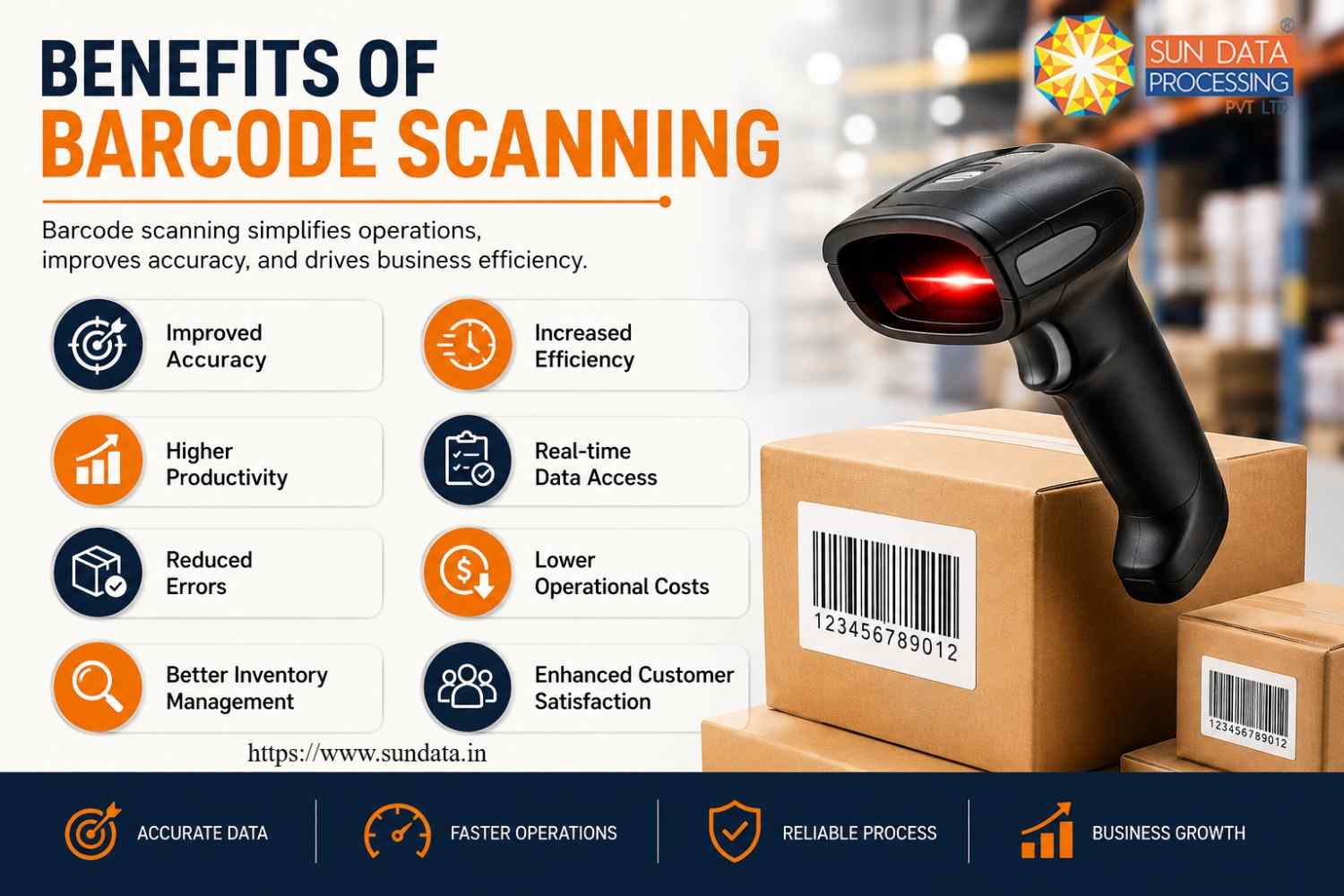
Barcode scanning helps businesses improve accuracy, reduce manual efforts, and manage daily operations more efficiently. It allows companies to capture information quickly, maintain better records, and improve workflow across different departments.
Faster Data Entry
Barcode scanners make data entry faster by capturing product information instantly through a simple scan. Employees do not need to manually enter details, which saves time and reduces the effort required for repetitive tasks. This helps businesses process information quickly and maintain smooth operations.
Reduces Human Errors
Manual data entry can often result in incorrect product details, stock counts, or transaction records. Barcode scanning reduces these errors by directly collecting accurate information from barcode labels. This helps businesses maintain reliable data and avoid problems caused by incorrect records.
Better Inventory Management
Barcode scanning helps businesses track inventory levels, product movement, and stock availability with better accuracy. Employees can quickly update stock information and monitor items across different locations. This improves inventory control and helps prevent issues like overstocking or stock shortages.
Improves Operational Efficiency
Barcode technology helps businesses complete daily tasks faster by reducing manual processes. Activities like receiving goods, order processing, and stock checking become easier with barcode scanners. This improves workflow and allows employees to focus on other important tasks.
Easy Product Tracking
Barcode scanners help businesses track products throughout their movement cycle. Each barcode contains specific product information that makes it easier to identify, locate, and manage items. This improves visibility and helps businesses maintain better control over their products.
Better Data Management
Barcode scanners help businesses collect and organize accurate information in a structured way. The collected data can be used for inventory records, reports, and business analysis. Better data management supports improved planning and decision-making.
The Benefits of Barcode Scanning in Healthcare
Barcode scanning has become an essential technology in healthcare because it helps hospitals manage patient information, medicines, and medical equipment with better accuracy. It reduces manual work, improves safety, and supports faster healthcare operations.
Improves Patient Safety
Barcode scanning helps healthcare professionals confirm patient identity and treatment details accurately. By scanning patient wristbands and medication labels, staff can verify the right patient, medicine, and dosage before providing treatment. This reduces the chances of errors and improves patient safety.
Better Medication Management
Barcode scanners help hospitals track medicines from receiving to final usage. Healthcare staff can quickly check medicine details, batch information, and expiry dates through barcode scanning. This helps maintain proper medicine records and reduces the risk of medication-related mistakes.
Accurate Patient Records
Barcode technology helps healthcare facilities maintain accurate patient records by reducing manual data entry. Doctors and staff can access updated information quickly, which helps improve communication, record management, and overall patient care.
Efficient Medical Equipment Tracking
Hospitals use barcode scanning to manage medical equipment, devices, and tools effectively. It helps staff track equipment location, usage, and availability, ensuring that important resources are available whenever required.
Faster Healthcare Operations
Barcode scanning helps healthcare teams complete daily tasks more quickly by reducing paperwork and manual processes. From patient registration to inventory management, it improves workflow and allows staff to spend more time focusing on patient care.
The Benefits of Barcode Scanning in Logistics
Barcode scanning helps logistics companies manage the movement of goods, shipments, and warehouse activities with better visibility. It supports faster handling of packages, accurate tracking, and smoother supply chain operations. Real-Time Shipment Visibility Barcode scanning allows logistics teams to track shipments as they move through different stages. Each scan updates shipment status, helping businesses know the exact location and movement of goods during transportation.
Faster Loading and Unloading
Barcode scanners help warehouse teams quickly identify packages during loading and unloading activities. This reduces handling time, improves vehicle turnaround, and helps teams manage a higher volume of shipments efficiently.
Improved Order Picking Accuracy
Barcode scanning helps warehouse employees pick the correct products based on order details. It reduces the chances of wrong items being selected and improves the accuracy of order fulfillment.
Better Proof of Delivery
Barcode scanners help delivery teams confirm successful deliveries by recording package details at the time of handover. This creates accurate delivery records and improves transparency between businesses and customers.
Simplifies Returns Management
Barcode scanning makes the reverse logistics process easier by helping teams identify returned products quickly. Businesses can track returned items, update records, and manage product movement more effectively.
The Benefits of Barcode Scanning in Retail
Barcode scanning helps retail businesses manage products, sales, and customer services more efficiently. It allows stores to improve checkout processes, maintain accurate product information, and manage inventory across different sales channels.
Faster Checkout Process
Barcode scanners help cashiers complete billing quickly by instantly capturing product details and prices. This reduces customer waiting time and creates a smoother checkout experience, especially during busy hours.
Accurate Price Management
Barcode scanning helps retailers maintain updated product prices and information. When a product is scanned, the system displays the correct details, reducing pricing mistakes and improving billing accuracy.
Better Stock Replenishment
Barcode technology helps retailers monitor product availability and identify items that need restocking. It allows store teams to maintain the right stock levels and avoid situations where popular products become unavailable.
Improved Customer Experience
Barcode scanning helps retail staff quickly access product information, check availability, and assist customers better. Faster service and accurate product details help create a better shopping experience.
Easier Sales Tracking
Barcode scanners record sales information automatically during transactions. Retailers can use this data to understand product demand, monitor sales trends, and make better decisions about inventory planning.
The Benefits of Barcode Scanning in Manufacturing
Barcode scanning helps manufacturing companies manage production activities, raw materials, and finished goods with better accuracy. It supports smooth operations by improving material tracking, quality control, and production visibility.
Better Raw Material Tracking
Barcode scanning helps manufacturers track raw materials from receiving to production. Teams can quickly identify materials, check availability, and maintain accurate records to avoid delays caused by missing or incorrect inventory information.
Improves Production Monitoring
Barcode scanners help monitor products at different stages of the manufacturing process. Businesses can track work progress, identify production status, and maintain better control over manufacturing activities.
Supports Quality Control
Barcode technology helps manufacturers maintain product quality by linking items with important information such as batch details and inspection records. This makes it easier to identify issues and manage quality checks.
Efficient Finished Goods Management
Barcode scanning helps manufacturers manage finished products before storage or shipment. It allows teams to update product details, track movement, and ensure accurate dispatch of goods.
Reduces Production Delays
Barcode scanners provide quick access to important production data and reduce manual record-keeping tasks. This helps teams save time, improve workflow, and complete manufacturing activities more efficiently.
How Does Barcode Scanning Work?
Barcode scanning works by reading the information stored inside a barcode label and converting it into digital data. A barcode scanner uses light or imaging technology to capture the barcode pattern and sends the information to a connected software system.
When a scanner reads a barcode, it identifies the unique numbers or characters linked to a product, asset, or item. The system then matches this information with stored data, such as product details, inventory levels, or shipment records.
The process starts when a barcode label is created and attached to an item. When the item is scanned, the captured data is automatically updated in the business system, helping teams maintain accurate records without manual entry.
Barcode scanning systems can be connected with inventory management software, warehouse systems, or other business applications. This allows businesses to track items, update information in real time, and manage operations more effectively.
Importance of Barcode Scanning
Barcode scanning has become an important part of modern business operations because it helps companies manage information quickly and accurately. It reduces dependency on manual processes and allows employees to complete tasks with better speed and control.
Barcode technology helps businesses maintain accurate records of products, inventory, assets, and shipments. By capturing data through quick scans, companies can reduce errors and improve visibility across different operations.
The importance of barcode scanning is visible across industries like healthcare, logistics, retail, and manufacturing. It supports better tracking, faster processing, and smoother workflows by providing reliable information whenever required.
Businesses using barcode scanning solutions can improve productivity and maintain better control over their daily activities. It helps organizations save time, reduce operational challenges, and make processes more organized.
How Sundata Barcode Scanners Streamline Operations
Sundata barcode scanners help businesses manage daily operations with faster and more accurate data collection. They reduce manual entry work and help teams track products, inventory, and assets with better visibility. This allows businesses to maintain accurate records and complete tasks more efficiently.
With quick scanning capabilities, Sundata barcode scanners support smooth inventory and warehouse operations. They help employees manage activities like stock checking, product tracking, receiving, and dispatching with less effort. This improves workflow speed and reduces the chances of operational errors.
Sundata barcode scanners can be used across different industries, including logistics, retail, manufacturing, and healthcare. By connecting barcode data with business systems, they help organizations maintain organized information and improve control over their processes.
With reliable scanning performance and easy data management, Sundata barcode scanners help businesses save time, improve productivity, and create smoother operations. They provide a practical solution for companies looking to manage their day-to-day activities more effectively.
FAQ
1. What industries use barcode scanning?
Barcode scanning is used in industries like healthcare, logistics, retail, manufacturing, and warehousing. Businesses use it for tracking products, managing inventory, improving accuracy, and streamlining daily operations.
2. How does barcode scanning help in inventory management?
Barcode scanning helps businesses track stock levels, monitor product movement, and maintain accurate inventory records. It reduces manual errors and helps teams manage stock more efficiently.
3. Why is barcode scanning important for businesses?
Barcode scanning helps businesses save time, improve data accuracy, and reduce operational mistakes. It provides better visibility into products, assets, and processes, helping companies manage their operations more effectively.
4. Can barcode scanning improve business efficiency?
Yes, barcode scanning helps businesses improve efficiency by reducing manual tasks and speeding up data collection. It allows employees to complete processes like inventory updates, product tracking, and order management with better accuracy.
5. What is the role of barcode scanning in healthcare?
Barcode scanning helps healthcare organizations manage patient information, medicines, and medical equipment accurately. It reduces errors in medication management, improves record accuracy, and supports safer patient care.
Conclusion
Barcode scanning has become an important solution for businesses looking to improve accuracy, speed, and operational control. It helps different industries manage products, inventory, shipments, assets, and records with less manual effort.
From healthcare and logistics to retail and manufacturing, barcode technology supports smoother workflows and better data management. It reduces errors, saves time, and helps businesses make better decisions with accurate information.
Sundata barcode scanners provide reliable scanning solutions that help businesses streamline their operations and improve productivity. With better tracking and efficient data handling, companies can manage their daily processes more effectively.
