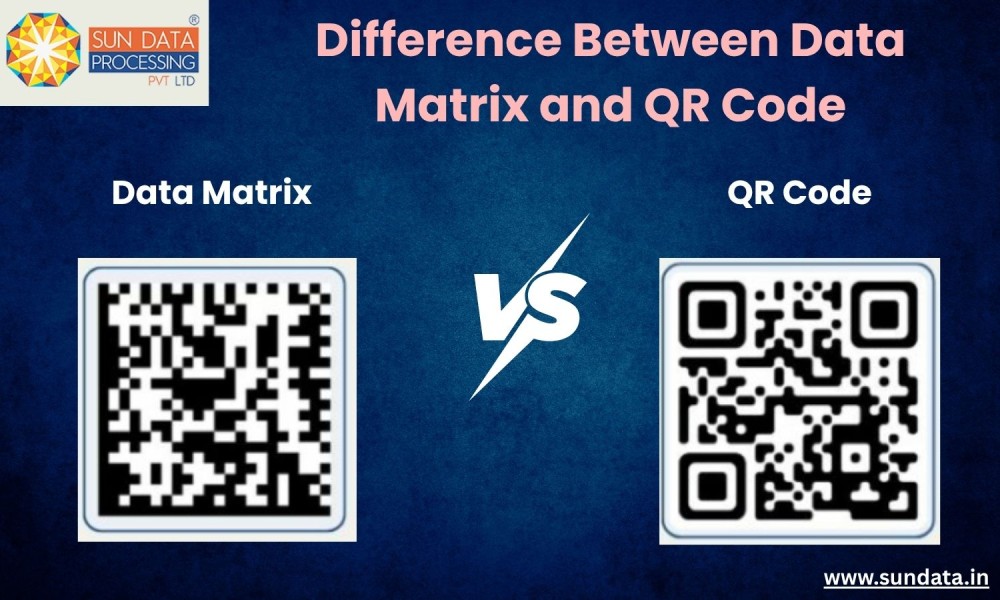
2D codes have become a vital part of product labeling, packaging, and digital communication. From manufacturing to healthcare and retail, these compact codes help businesses manage data efficiently. Among the most commonly used formats, the Data Matrix code and the QR code stand out because they store more information than traditional barcodes and can be scanned quickly on almost any device.
Even though both codes may look similar, they serve different needs. A Data Matrix barcode is widely used in industrial and small-space printing, while a QR code is popular for consumer-facing applications like payments, websites, and marketing. Knowing the difference between Data Matrix vs QR code helps companies choose the best option for their workflow, printing method, and data requirements.
What is a Data Matrix Code?
A Data Matrix code is a 2D barcode made up of small black and white square modules arranged in a grid. It is designed to store a large amount of information in a very small space, which makes it ideal for electronics, medical devices, automotive parts, and other products where labeling space is limited. Due to its compact design, it remains readable even when printed at a small size or on curved surfaces.
One of the main advantages of a Data Matrix code is its strong error correction capability. Even if a part of the code is scratched, faded, or damaged, scanners can still retrieve the data accurately. This reliability is why industries that need high-quality traceability often choose a data matrix barcode vs QR code for tiny items or serialized tracking.
How to Identify a Data Matrix Code
A Data Matrix code is easy to recognize once you know what to look for. It has a square or rectangular shape made of many tiny black and white modules. The most important feature is the L-shaped finder pattern of two solid, continuous lines that meet at a right angle. This “L” helps scanners understand the code’s position and orientation.
The other two sides contain a dotted or alternating pattern called the timing pattern, which helps scanners measure the size of the code. Unlike QR codes, Data Matrix codes do not have large squares in the corners. They have a cleaner, simpler design, making them suitable for extremely small printing areas. Even when printed at sizes as small as 2–3 mm, the structure remains clear enough for industrial scanners to detect.
How to Scan a Data Matrix Code
Scanning a Data Matrix code is straightforward. Industrial environments typically use laser scanners, fixed-mount readers, or camera-based vision systems. These devices can read Data Matrix symbols even if they are printed very small, engraved on metal, etched with lasers, or marked on uneven surfaces.
Most modern smartphones can also scan Data Matrix codes through third-party barcode scanning apps, as many default camera apps do not read them automatically. To scan, you simply open the app, hold the phone steady, and point the camera toward the code. Thanks to strong error correction, the code remains readable even if it is scratched, partially covered, or printed on a challenging material like plastic, rubber, or steel.
What is a QR Code?
A QR code (Quick Response code) is a type of 2D barcode designed to store information that can be scanned instantly using smartphones or digital scanners. It is widely used in marketing, payments, authentication, website linking, and many consumer-facing applications. QR codes can hold text, URLs, contact details, payment data, and many other types of information, making them a flexible tool for both businesses and everyday users.
QR codes are larger in appearance compared to Data Matrix codes, as they include multiple structural markers and a denser layout. Their design allows them to store more characters, especially when the code needs to be scanned from longer distances. This is one reason why many public-facing services prefer using QR code vs Data Matrix formats for customer interactions.
How to Identify a QR Code
A QR code is easy to spot because of its three large square markers located in three corners of the code. These “position markers” help the scanner quickly detect and align the code from any angle. The fourth corner contains a smaller square or pattern that helps the scanner adjust brightness and contrast.
Inside the QR code, there are many small modules arranged in a grid, forming patterns that represent the stored data. QR codes can also come in different styles, traditional black-and-white, colored versions, or even customized formats for branding.
How to Scan a QR Code
Scanning a QR code is very simple because most smartphones support it directly through their camera apps. You just open the camera, point it at the QR code, and a notification appears with the stored information or link. This ease of scanning has made QR codes extremely popular in digital payments, restaurant menus, event check-ins, and app downloads.
In professional environments, handheld scanners and POS systems also read QR codes instantly. Even from a distance or at an angle, QR codes remain easy to scan due to their strong error correction levels. This reliability is a key reason businesses often choose the QR code vs Data Matrix option for customer-facing
Data Matrix vs QR Codes: Understanding the Key Differences
Data Matrix and QR codes are both powerful 2D symbols, but they are designed for different environments and scanning needs. Understanding their key differences helps businesses select the right format instead of relying on one code for every situation.
1. Structure and Appearance
-
Data Matrix: Features an L-shaped finder pattern and a dotted border. Its compact, clean design makes it ideal for small labeling areas.
-
QR Code: Identified by three large square markers in the corners, making it more noticeable and easy for scanners to detect instantly.
2. Space Efficiency
-
Data Matrix: Extremely efficient in tight spaces and maintains high readability even when printed at very small sizes (as small as a few millimeters).
-
QR Code: Requires more space to store similar amounts of data and becomes harder to read when the size is reduced too much.
3. Data Storage Capacity
-
Data Matrix: Holds up to around 2,300 characters, which is impressive for its small footprint.
-
QR Code: Can store up to around 4,000 characters, making it suitable when longer text, URLs, or payment data must be embedded.
4. Scanning Distance
-
Data Matrix: Best for short-range scanning, common in factories, production lines, and assembly units.
-
QR Code: Performs well from longer distances, making it ideal for posters, signboards, and customer-facing uses.
5. Error Correction Strength
-
Data Matrix: Very strong error correction, allowing readability even when up to 30% of the code is damaged, scratched, or dirty.
-
QR Code: Also supports error correction but is more dependent on its alignment markers for stable scanning.
6. Printing and Durability
-
Data Matrix: Works well with direct part marking (laser etching, dot-peening, engraving). Designed for industrial surfaces like metal, plastic, or rubber.
-
QR Code: Mostly printed on paper, packaging, labels, or digital displays. Not used often for direct part marking.
7. Use Cases
-
Data Matrix: Preferred in aerospace, medical devices, electronics, and automotive manufacturing where traceability is critical.
-
QR Code: Common in payments, restaurant menus, websites, marketing campaigns, and general consumer interactions.
8. Smartphone Compatibility
-
Data Matrix: Many default phone cameras do not read it directly; usually it needs a dedicated scanning app.
-
QR Code: Universally recognized by smartphone cameras, making it more accessible for the general public.
9. Customization Options
-
Data Matrix: Has limited design flexibility due to its dense module structure.
-
QR Code: Can be customized with colors, brand logos, rounded edges, and design variations without affecting readability.
10. Orientation Detection
-
Data Matrix: Uses its L-shaped pattern for orientation, allowing scanners to decode it regardless of rotation.
-
QR Code: Alignment markers help scanners read the code even when tilted, rotated, or partially obstructed.
Why Are QR Codes Better Than Data Matrix Codes?
QR codes are often preferred in public and consumer-facing situations because they are easy to scan, widely recognized, and flexible for various uses. While Data Matrix codes are excellent for industrial needs, QR codes offer advantages that make them more suitable for everyday applications.
One of the biggest reasons businesses choose QR codes is their compatibility with smartphones. Almost every phone can scan a QR code without a separate app, which makes it convenient for payments, website links, menus, and customer engagement. QR codes also support more visual customization, allowing brands to add logos, colors, and design elements without affecting scan quality. QR codes can also store more characters compared to many Data Matrix formats, making them useful when long URLs or detailed information must be embedded. Their ability to be scanned from longer distances adds to their usefulness in marketing materials, posters, packaging, and digital screens.
In short, QR codes offer better convenience, visibility, and flexibility, which is why they are more widely used in public environments compared to Data Matrix codes.
Choosing the Right 2D Code for Your Use Case
Selecting between a Data Matrix code and a QR code depends on where the code will be used, how much space is available, and who will scan it. Each format has its strengths, so choosing the right one helps ensure reliable scanning and smooth operations. A Data Matrix code is the better choice when you are working with tiny surfaces, curved shapes, or industrial materials. It works well for part-level tracking, medical equipment labeling, and high-volume production lines. If your goal is long-term durability, resistance to damage, and efficient traceability, Data Matrix fits these needs perfectly.
A QR code, on the other hand, is ideal when customers or the general public need to scan the code. It performs well on packaging, posters, invoices, product manuals, and digital screens. QR codes are easy to scan from a distance and support smartphone scanning without any extra steps. They also provide a more flexible option for branding and design.
Applications of 2D Codes
2D codes are used across industries to speed up identification, tracking, and data sharing. Their ability to store detailed information in compact spaces makes them essential in both industrial processes and customer-facing tasks.
Where Data Matrix Codes Are Commonly Used
Data Matrix codes play a major role in environments where precision and durability matter. Manufacturers use them for marking small electronic components, circuit boards, and automotive parts. They are also widely used in medical equipment, surgical instruments, and pharmaceutical packaging because the codes stay readable even when printed at very small sizes.
In aerospace and heavy industries, Data Matrix symbols are often engraved or laser-etched directly onto metal components. This allows companies to track every part through its entire lifecycle, even under harsh conditions like heat, chemical exposure, or abrasion.
Where QR Codes Are Commonly Used
QR codes are part of everyday life because they are easy to scan using a regular smartphone. Businesses use them on packaging, advertisements, brochures, and digital screens to direct customers to websites, apps, or product information. Restaurants rely on QR codes for digital menus, while retail stores use them for billing, offers, and loyalty programs.
QR codes also support secure digital payments, event check-ins, ticket validation, and product authentication. Their strong visibility and scanning convenience make them ideal for any situation where quick public interaction is needed.
Best Practices for Printing 2D Codes
When printing 2D codes, the most important step is maintaining clarity and strong contrast. A clean, light background with dark modules helps scanners read the code quickly. The surface should be smooth, and the size should not be reduced beyond the recommended limits, especially for Data Matrix codes used on small components. It is also important to maintain a proper quiet zone with an empty margin around the code so scanners can identify its boundaries easily without confusion.
The printing method should match the application environment. For packaging and labels, high-resolution inkjet or thermal printers work well, while laser marking is ideal for metal, plastic, or industrial surfaces. After printing, always test the code using different scanners and angles. This ensures the code stays readable even if the product goes through handling, movement, or exposure to harsh conditions. Proper printing practices help prevent scanning failures and ensure smooth operations across industries.
Which Technology Is Best for Printing 2D Codes?
The best printing technology for 2D codes depends on the type of material, the size of the code, and the environment in which it will be used. For packaging, labels, and general retail applications, thermal transfer and high-resolution inkjet printers are commonly preferred. They produce sharp, consistent prints that work well for both QR codes and Data Matrix codes, especially when the codes are printed on paper, cartons, or product labels.
In industrial environments, where codes may need to withstand heat, chemicals, or rough handling, laser marking is considered the most reliable technology. It creates permanent marks on metal, plastic, glass, or rubber without fading over time. Dot-peen marking is another option for heavy-duty surfaces, especially when durability is more important than visual appearance. By choosing the right printing technology, businesses can maintain reliable scanning performance throughout the product’s lifecycle.
FAQ
1. Is a QR code a type of matrix?
Yes, a QR code is a type of matrix barcode because it stores data in a grid of square modules.
2. Can a phone scan a Data Matrix?
Some phones can scan Data Matrix codes, but many require a dedicated barcode scanning app.
3. Which is an example of a data matrix?
A common example is the tiny code printed on electronics, medical devices, and industrial parts for tracking.
4. What is another name for a QR code?
A QR code is also known as a “Quick Response code.”
5. Which is better: QR code or Data Matrix?
QR codes are better for public use and smartphone scanning, while Data Matrix is better for industrial marking and small surfaces.
6. What is better than a QR code?
For tiny surfaces or durable part marking, a Data Matrix code is often better than a QR code.
Conclusion
Both Data Matrix codes and QR codes serve important roles in today’s tracking and communication systems, but the right choice depends on your environment and scanning needs. Data Matrix codes are reliable for industrial parts, small components, and long-term durability, while QR codes are ideal for payments, customer interactions, packaging, and marketing.
For businesses looking to adopt the right 2D code, Sundata, as a trusted barcode solution provider, supports companies in selecting, printing, and implementing the most suitable barcode technology. With the right guidance and reliable solutions, Sundata helps ensure accurate identification, smooth operations, and better efficiency across all stages of your workflow.
