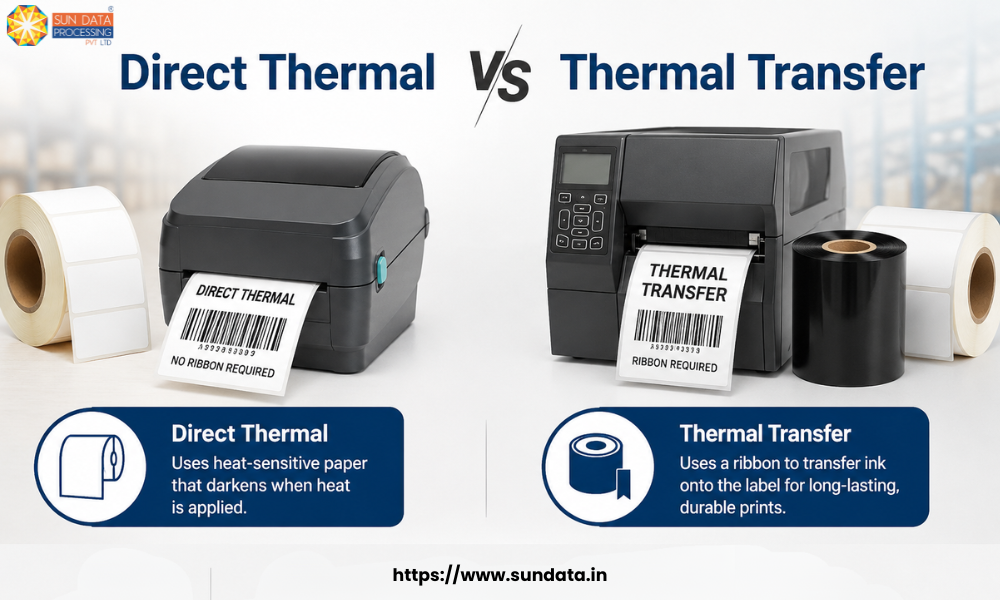
Thermal printing is widely used for barcode labels, product tags, shipping labels, receipts, and other business applications. Two common technologies are direct thermal and thermal transfer printing.
Both methods use heat to create an image, but they work in different ways and are suitable for different types of labels. Understanding the difference between them can help businesses choose the right printer, label material, and printing method for their needs.
In this guide, we will compare direct thermal vs thermal transfer printing, explain how each technology works, and look at their key benefits, differences, and common uses.
What is Direct Thermal?
Direct thermal printing is a printing method that uses heat-sensitive labels or paper to create text, barcodes, and images. The printer applies heat directly to the label through a heated printhead, which makes the required areas turn dark.
A direct thermal printer does not use ink, toner, or a ribbon. This makes the printing process simple and suitable for businesses that need quick and temporary labels.
Direct thermal printing is commonly used for shipping labels, receipts, retail tags, food labels, tickets, and other applications where the printed information does not need to last for a very long time.
What Are the Benefits of Direct Thermal Printing?
Direct thermal printing is a simple and practical option for businesses that need quick label printing. It is especially useful for short-term labels where long-lasting print quality is not the main requirement.
No Ribbon Required
Direct thermal printers print directly on heat-sensitive labels, so they do not require a thermal ribbon. This reduces the number of consumables businesses need to purchase and manage.
Lower Printing Cost
Since there is no ribbon or ink involved, direct thermal printing can help reduce regular printing expenses. It is a cost-effective choice for businesses that print large volumes of temporary labels.
Easy Maintenance
Direct thermal printers have a simple printing process with fewer consumable components. This makes routine cleaning, maintenance, and day-to-day printer handling easier for users.
Fast Printing
Direct thermal printers can produce labels quickly, which makes them suitable for busy work environments. Businesses can use them for applications such as shipping labels, receipts, and retail tags where fast printing is important.
Simple to Use
Direct thermal printing does not require users to load or replace ribbons. Once the right heat-sensitive labels are loaded, the printer is ready to produce the required labels with minimal setup.
What is Thermal Transfer?
Thermal transfer printing uses heat to transfer ink from a thermal transfer ribbon onto a label or other printing material. The printer’s heated printhead melts the ribbon ink onto the surface, creating clear text, barcodes, and images.
Unlike direct thermal printing, this method requires a ribbon during the printing process. Thermal transfer printing is suitable for labels that need to remain readable for a longer period or need better resistance to heat, moisture, and other environmental conditions.
What Are the Benefits of Thermal Transfer Printing?
Thermal transfer printing is a reliable choice for businesses that need durable and long-lasting labels. It can be used with different label materials and is suitable for applications where labels may face demanding conditions.
Long-Lasting Prints
Thermal transfer printing produces labels that can remain readable for a long time. This makes it suitable for product identification, asset tracking, inventory labels, and other applications where labels need to stay in use.
Durable Against Environmental Conditions
Thermal transfer labels can provide better resistance to heat, moisture, scratches, and other environmental conditions. The right ribbon and label material can help the printed information remain clear in demanding work environments.
Works With Different Materials
Thermal transfer printers can print on a wide range of label materials, including paper, polyester, and other synthetic materials. This gives businesses more flexibility when choosing labels for different applications.
Clear and High-Quality Printing
Thermal transfer printing produces sharp text, barcodes, and graphics when the correct ribbon and label combination is used. Clear printing is important for barcode scanning and accurate product identification.
Suitable for Long-Term Labeling
Thermal transfer printing is a good option when labels need to remain readable for months or years. It is commonly used for asset labels, product labels, warehouse identification, and industrial applications.
Direct Thermal vs Thermal Transfer: Understanding Key Differences
The choice between direct thermal and thermal transfer depends on the type of label, how long it needs to last, and the environment where it will be used. Both printing methods have their own advantages.
Printing Method
Direct thermal printing creates an image by applying heat directly to a heat-sensitive label. Thermal transfer printing uses heat to transfer ink from a ribbon onto the label surface.
Use of Ribbon
Direct thermal printers do not require a ribbon, which makes the printing setup simple. Thermal transfer printers need a ribbon, which adds an additional consumable to the printing process.
Label Durability
Direct thermal labels are generally better suited for short-term applications because the print can fade or darken when exposed to heat, sunlight, or other conditions. Thermal transfer labels are more suitable for long-term use when the right ribbon and label material are selected.
Label Materials
Direct thermal printing mainly works with specially coated, heat-sensitive materials. Thermal transfer printers can work with a wider range of materials, including paper and synthetic labels.
Resistance to Heat and Moisture
Direct thermal labels may not be suitable for environments with high heat or moisture. Thermal transfer printing can provide better resistance when the appropriate ribbon and durable label material are used.
Maintenance and Operation
Direct thermal printing has a simpler setup because there is no ribbon to install or replace. Thermal transfer printers need regular ribbon changes along with normal printer cleaning and maintenance.
Common Applications
Direct thermal printing is commonly used for shipping labels, receipts, tickets, and other short-term applications. Thermal transfer printing is often used for product labels, asset tags, warehouse labels, and industrial applications where durability matters.
Here is a quick comparison of direct thermal and thermal transfer printing:
Which Printing Technology Is Right for Your Business?
The right printing technology depends on your label requirements and how long the printed information needs to remain readable. Direct thermal printing is a good choice for short-term applications such as shipping labels, receipts, tickets, and temporary retail labels. It offers a simple setup because it does not require a ribbon.
Thermal transfer printing is more suitable when labels need to last for a longer period or face heat, moisture, scratches, or other demanding conditions. It can print on different label materials and is commonly used for product labels, asset tags, warehouse labels, and industrial applications where durability is important.
Cost, label material, printing volume, and application should also be considered before choosing between direct thermal vs thermal transfer. If your business needs simple and temporary labels, direct thermal can be a practical option. For durable and long-term labeling, thermal transfer is generally the better choice.
FAQ
1. Which lasts longer, direct thermal or thermal transfer?
Thermal transfer labels generally last longer than direct thermal labels. With the right ribbon and label material, they can provide better resistance to heat, moisture, scratches, and regular wear.
2. Does thermal transfer printing require a ribbon?
Yes, thermal transfer printing requires a ribbon to transfer ink onto the label. Direct thermal printing does not require a ribbon because it prints directly on heat-sensitive material.
3. Which printing method is best for shipping labels?
Direct thermal printing is commonly used for shipping labels because it offers fast printing and does not require a ribbon. It is suitable when the label only needs to remain readable during shipping and delivery.
4. Can direct thermal and thermal transfer printers use the same labels?
No. Direct thermal printers need heat-sensitive labels, while thermal transfer printers use labels with a suitable ribbon.
5. Which is more suitable for industrial labeling?
Thermal transfer is generally better for industrial labeling because it produces more durable prints that can handle demanding conditions.
Conclusion
The choice between direct thermal vs thermal transfer depends on your business needs. Direct thermal printing is a simple and cost-effective option for short-term labels such as shipping labels, receipts, and tickets.
Thermal transfer printing is a better choice for applications that need durable, long-lasting labels. It works with different label materials and is suitable for product, warehouse, asset, and industrial labeling.
Your final choice should depend on the label material, required durability, printing volume, and application.
