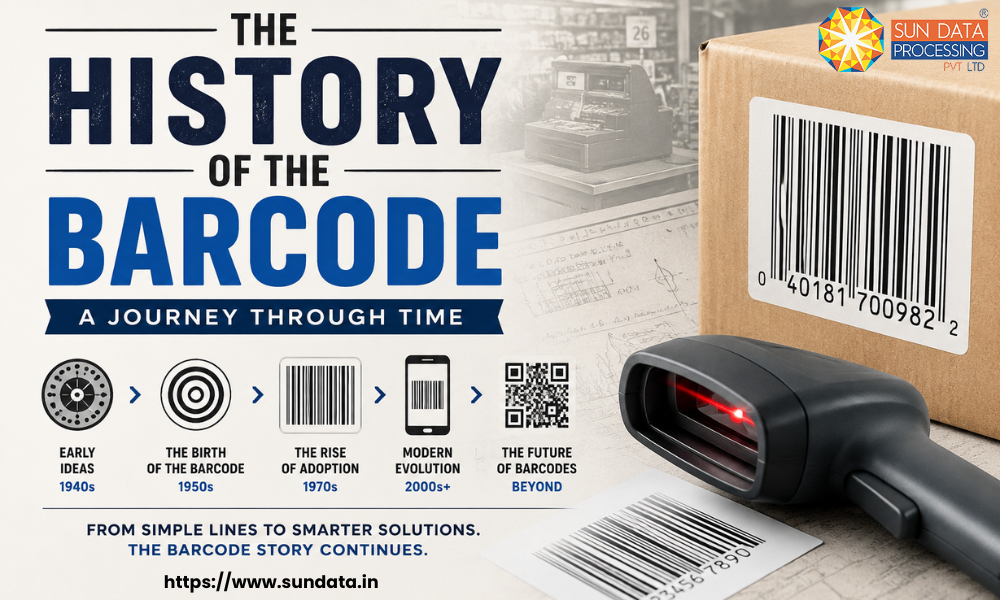
Barcodes are now a common part of our daily life. We see them on product packaging, shopping bills, medicine labels, warehouse boxes, and many other places. These small patterns of lines and numbers help businesses identify products quickly and manage information easily.
The history of the barcode started with a simple idea of making product identification faster and more accurate. Over the years, barcode technology has changed from basic black-and-white lines to advanced systems used across industries worldwide.
From retail stores to large warehouses, barcodes have become an important part of inventory management and supply chain operations. This blog covers the history of the barcode, its development, early uses, working process, and how barcode technology continues to evolve.
The Beginning of Barcodes
The beginning of barcodes goes back to the late 1940s when businesses were looking for a better way to manage product information. Retail stores mainly depended on manual price tagging, which took more time and often caused mistakes.
The idea behind barcode technology was created to make product identification faster and reduce human errors. The first concepts focused on using patterns that machines could read and connect with product details.
The early development of barcode systems was inspired by the need for a simple solution to track products automatically. This need became stronger as businesses started handling more products and required a faster checkout process. The history of the barcode shows how a small idea transformed into a technology that changed the way businesses manage sales, inventory, and product tracking.
The Birth of the Barcode
The birth of the barcode began in 1948 when two engineers, Norman Joseph Woodland and Bernard Silver, started working on a solution for automatic product identification. They wanted to create a system that could help stores collect product information quickly without manual entry.
Woodland got the idea of using patterns that could be scanned by machines. The first barcode design was based on a series of lines and circles, inspired by Morse code technology. This early concept became the foundation for modern barcode systems.
In 1952, Woodland and Silver received a patent for their barcode design. Although the technology was not immediately used in stores, it created the base for future developments in product tracking.
The first commercial barcode system became successful years later when businesses adopted the Universal Product Code (UPC). This step marked a major change in the history of the barcode and opened the way for faster checkout and better inventory management.
The History of the Barcode
The history of the barcode shows how a simple identification system developed into an important business technology. After the first barcode patent was created, researchers and companies continued improving the design to make it more practical for everyday use.
In the 1970s, the introduction of the Universal Product Code (UPC) became a major milestone in barcode development. The first product scanned using a UPC barcode was a pack of chewing gum in 1974 at a supermarket in the United States. This successful test proved that barcodes could make product checkout faster and more accurate.
During the following years, barcode usage expanded beyond retail stores. Industries such as manufacturing, healthcare, logistics, and warehousing started using barcodes to track products, manage inventory, and improve operational accuracy.
With advancements in technology, different types of barcodes were developed, including 1D barcodes and 2D barcodes like QR codes. Today, the history of barcodes represents the continuous growth of a technology that helps businesses handle millions of products efficiently.
The Future of Barcode Technology
Barcode technology continues to improve with new digital solutions and changing business needs. While traditional barcodes are still widely used, modern barcode systems are becoming faster, smarter, and more connected with advanced software.
Businesses are now using barcode technology with cloud platforms, mobile devices, and automated systems to get real-time product information. This helps companies improve inventory tracking, reduce errors, and manage operations more effectively.
The future of barcode technology will focus on better data accuracy, faster scanning, and stronger integration with technologies like automation and artificial intelligence. Industries such as retail, healthcare, manufacturing, and logistics will continue to depend on barcodes for smooth operations.
Even with new tracking technologies available, barcodes will remain a reliable and cost-effective solution for product identification and management across different industries.
The Future of Barcode Technology
Barcode technology continues to improve with new digital solutions and changing business needs. While traditional barcodes are still widely used, modern barcode systems are becoming faster, smarter, and more connected with advanced software.
Businesses are now using barcode technology with cloud platforms, mobile devices, and automated systems to get real-time product information. This helps companies improve inventory tracking, reduce errors, and manage operations more effectively.
The future of barcode technology will focus on better data accuracy, faster scanning, and stronger integration with technologies like automation and artificial intelligence. Industries such as retail, healthcare, manufacturing, and logistics will continue to depend on barcodes for smooth operations. Even with new tracking technologies available, barcodes will remain a reliable and cost-effective solution for product identification and management across different industries.
Interesting Facts About Barcodes
Barcodes may look like simple lines and numbers, but they have an important role in modern business operations. Here are some interesting facts about barcodes that show how this technology has changed over time.
- The first barcode patent was created in 1952 by Norman Woodland and Bernard Silver, but it took many years before businesses started using barcode systems widely.
The first product scanned with a UPC barcode was a pack of Wrigley’s chewing gum in 1974 at a supermarket in Ohio, USA.
A barcode does not store the complete product details. It usually contains a unique number that connects with information stored in a computer system.
There are different types of barcodes, including 1D barcodes like UPC and Code 128, along with 2D barcodes like QR codes that can store more information.
Barcodes are used in many industries, including retail, healthcare, logistics, manufacturing, and warehousing for tracking products and managing data.
- The history of the barcode proves that a small identification system can create a big impact on how businesses handle products and information.
Early Uses of Barcodes
The early uses of barcodes were mainly focused on improving product identification in retail stores. Before barcode systems, employees had to manually enter product prices, which required more time and increased the chances of mistakes.
Retail businesses were among the first to adopt barcode technology because it helped speed up the checkout process. Cashiers could scan product information quickly instead of searching for prices manually.
After successful use in supermarkets, barcodes started becoming popular in other industries. Warehouses began using them to track stock movement, while manufacturers used them to manage production items and product records.
Over time, the early uses of barcodes expanded into areas like healthcare, transportation, and logistics. This growth helped businesses save time, maintain accurate records, and manage products more efficiently.
How Barcode Technology Works
Barcode technology works through a simple process where a scanner reads the barcode and converts it into useful information. The complete process includes the following steps:
1. Barcode Creation
The process starts when a unique barcode is created for a product. This barcode contains a specific number or pattern that represents product details stored in a database.
2. Barcode Printing
After creation, the barcode is printed on product packaging, labels, tags, or boxes. The printed barcode can then be scanned whenever product information is needed.
3. Barcode Scanning
When a barcode scanner passes over the barcode, it reads the black lines, spaces, or patterns. The scanner captures this information using light sensors or imaging technology.
4. Data Conversion
The scanner converts the barcode pattern into digital data. This data is sent to a connected computer, POS system, or software application.
5. Information Retrieval
The system matches the scanned barcode number with the stored database. It displays details such as product name, price, availability, and inventory information.
6. Data Update
After the information is processed, the system updates records automatically. For example, a sale at a retail store can reduce inventory quantity, or a warehouse scan can update product movement records.
FAQ
1. When was the first barcode invented?
The first barcode concept was developed in 1948 by Norman Woodland and Bernard Silver. They later received a patent for their barcode design in 1952.
2. What was the first product scanned with a barcode?
The first product scanned using a UPC barcode was a pack of Wrigley’s chewing gum in 1974 at a supermarket in Ohio, USA.
3. Why were barcodes created?
Barcodes were created to make product identification faster, reduce manual errors, and help businesses manage product information more efficiently.
4. How do barcodes store information?
Barcodes store information through patterns of lines, spaces, or squares. A scanner reads these patterns and connects them with data stored in a computer system.
5. Are barcodes still used today?
Yes, barcodes are still widely used across industries such as retail, healthcare, manufacturing, logistics, and warehousing because they are simple, reliable, and cost-effective.
Conclusion
The history of the barcode shows how a simple idea transformed the way businesses identify and manage products. From the first barcode designs in the 1940s to today’s advanced scanning systems, barcode technology has continued to improve with changing business needs.
Barcodes have become an important part of industries like retail, manufacturing, healthcare, and logistics. They help businesses track products, manage inventory, reduce errors, and save valuable time.
With continuous advancements in digital technology, barcodes will continue to play an important role in product tracking and data management. This simple yet powerful technology remains one of the most useful solutions for businesses around the world.
