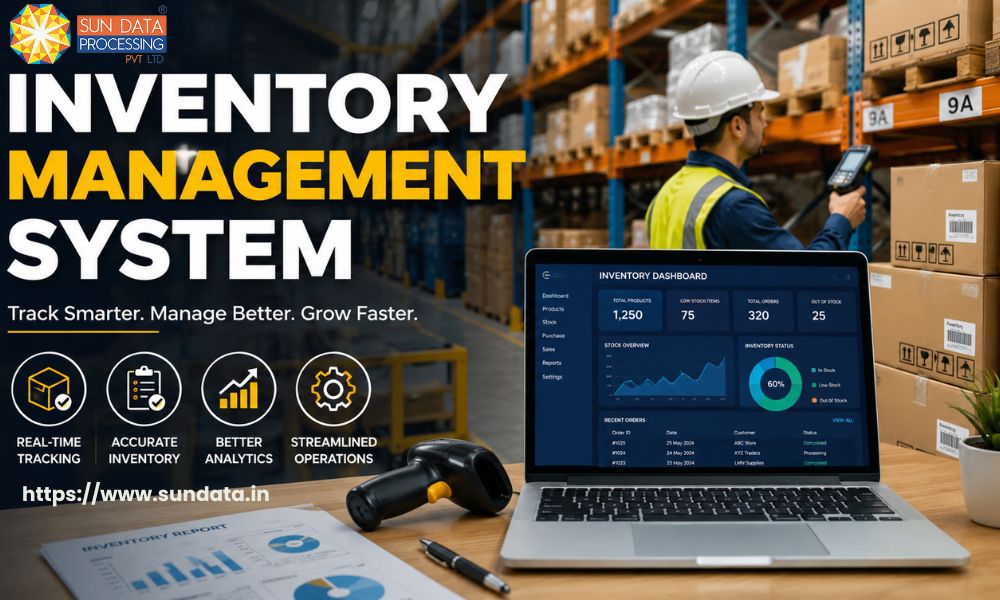
Every business wants to know what products are available, what needs to be reordered, and what customers are buying the most. Keeping track of inventory manually becomes difficult as the business grows. Small mistakes in stock records can lead to delayed orders, extra costs, and unhappy customers.
This is where an inventory management system becomes useful. It helps businesses keep accurate stock records, manage inventory movement, and reduce manual work. From receiving products to dispatching orders, every step becomes easier when inventory data is available in one place.
Whether you run a retail store, warehouse, manufacturing unit, or distribution business, choosing the best inventory management system helps you maintain stock accuracy and improve daily operations. It also provides better visibility into inventory levels, making it easier to plan purchases and avoid stock-related problems.
In this guide, you will understand what an inventory management system is, how it works, its different types, key features, industry applications, future trends, and how Sundata helps businesses manage inventory more efficiently.
What is an Inventory Management System?
An inventory management system is software that helps businesses keep track of their stock from the time products are received until they are sold or dispatched. It records every inventory movement, making it easier to know what is available, what is running low, and what needs to be reordered.
The system stores all inventory data in one place, so businesses do not have to depend on spreadsheets or manual records. Every stock update is recorded automatically, which reduces mistakes and saves time.
An inventory management system also helps manage purchasing, stock transfers, order fulfillment, and inventory audits. Teams can check real-time stock levels, monitor product locations, and make faster decisions without searching through multiple records.
As businesses grow, handling inventory across different warehouses becomes more challenging. The best inventory management system gives complete visibility of inventory across all locations, helping businesses maintain accurate stock levels and improve operational efficiency.
Importance of Inventory Management System
An inventory management system helps businesses maintain complete control over their stock and daily inventory operations. It provides real-time visibility into inventory levels, making it easier to track products, monitor stock movement, and maintain accurate records. This reduces manual errors and allows teams to manage inventory with greater confidence.
Proper inventory management also helps prevent stock shortages and overstocking. Businesses can reorder products at the right time based on actual demand instead of guesswork. Faster stock updates, accurate inventory data, and automated processes improve order fulfillment, reduce delays, and help warehouses operate more efficiently.
The inventory management system also supports better business decisions through detailed inventory reports and real-time insights. As business operations grow, the system makes it easier to manage inventory across multiple warehouses, improve productivity, control inventory costs, and deliver better service to customers.
How Does an Inventory Management System Work?
An inventory management system follows a step-by-step process to keep inventory accurate and organized throughout the supply chain. Every stock movement is recorded in real time, allowing businesses to maintain complete visibility over their inventory and reduce manual work.
Stock Receiving
The process begins when products arrive at the warehouse or storage facility. The system records important details such as product name, SKU, quantity, batch number, and storage location. Barcode scanners or RFID readers can capture this information instantly, reducing errors during stock entry.
Inventory Storage
After receiving, products are placed in their assigned warehouse locations. The system stores the location of every item, allowing warehouse staff to find products quickly whenever they are needed. Proper storage also helps improve space utilization and inventory organization.
Inventory Tracking
Every inventory movement is updated automatically whenever products are transferred, picked, packed, or dispatched. Real-time tracking allows businesses to check current stock levels at any time and maintain accurate inventory records across one or multiple warehouse locations.
Order Processing
When a customer places an order, the system checks product availability and reserves the required quantity. Inventory levels are updated automatically after the order is picked and shipped. Product returns and stock adjustments are also recorded to maintain accurate stock information.
Inventory Analysis
The system generates reports that provide insights into stock availability, inventory movement, fast-moving products, and slow-moving items. These reports help businesses make better purchasing decisions and improve inventory planning based on actual demand.
Stock Replenishment
The best inventory management system continuously monitors inventory levels and sends alerts when stock reaches the predefined reorder point. This allows businesses to replenish inventory on time, prevent stock shortages, and maintain smooth business operations.
Features of Inventory Management System
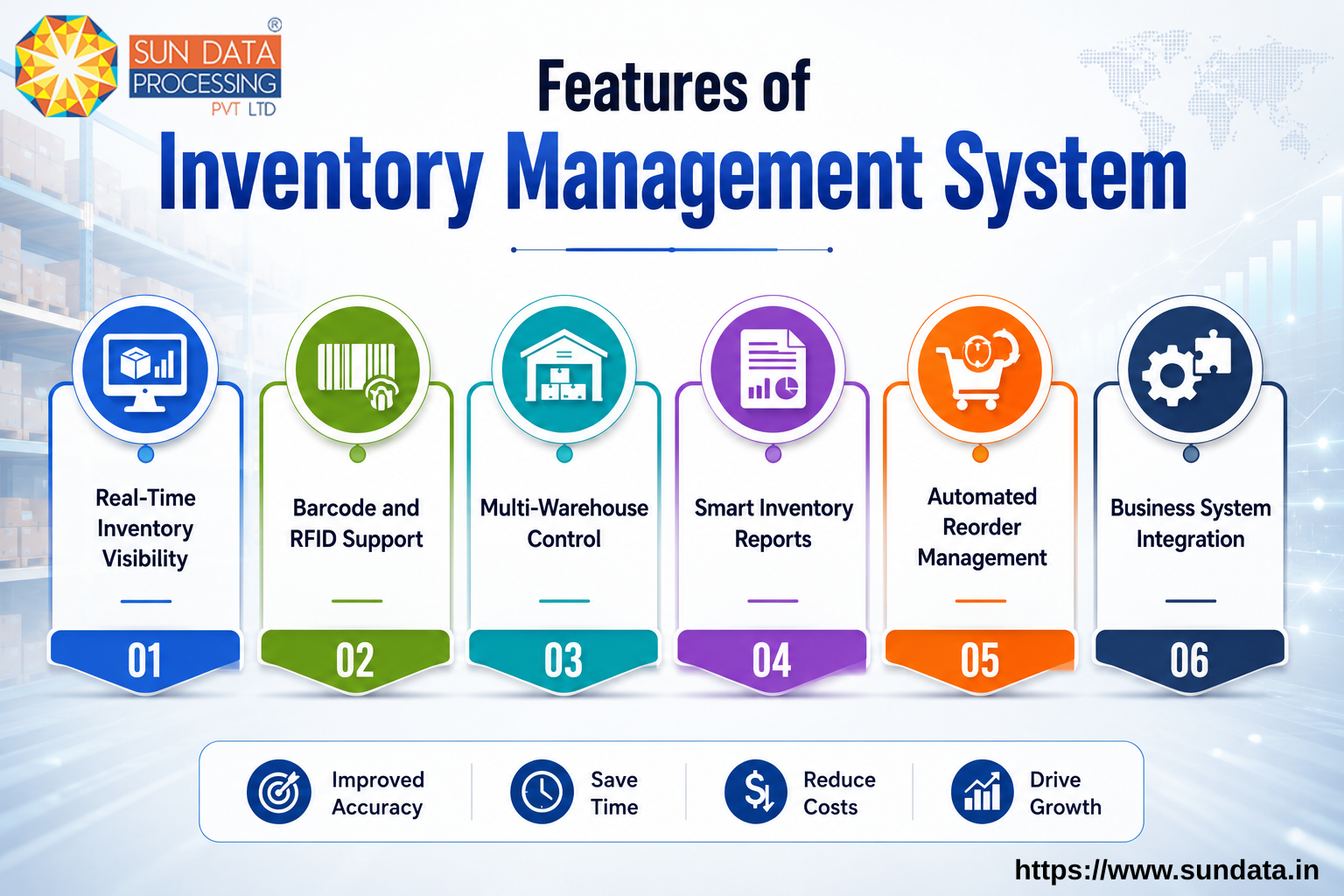
An inventory management system includes several features that help businesses manage stock with greater accuracy and efficiency. These features simplify daily inventory tasks, improve warehouse operations, and provide better visibility into inventory across the business.
Real-Time Inventory Visibility
The system updates stock levels automatically whenever products are received, moved, or dispatched. This allows businesses to check available inventory at any time and maintain accurate stock records.
Barcode and RFID Support
Barcode and RFID technology make inventory tracking faster and more reliable. Products can be identified quickly, reducing manual work and improving the speed of warehouse operations.
Multi-Warehouse Control
Businesses can manage inventory across multiple warehouses from a single platform. The system shows stock availability at each location, making transfers and inventory planning much easier.
Smart Inventory Reports
The system generates detailed reports on stock movement, product demand, inventory value, and warehouse performance. These insights help businesses make informed purchasing and inventory decisions.
Automated Reorder Management
Minimum stock levels can be predefined in the system. When inventory reaches the reorder point, automatic alerts help businesses replenish stock before shortages affect operations.
Business System Integration
The best inventory management system integrates with ERP, warehouse management, accounting, and sales software. This keeps inventory data synchronized across departments and improves overall business efficiency.
Examples of Inventory Management by Industry
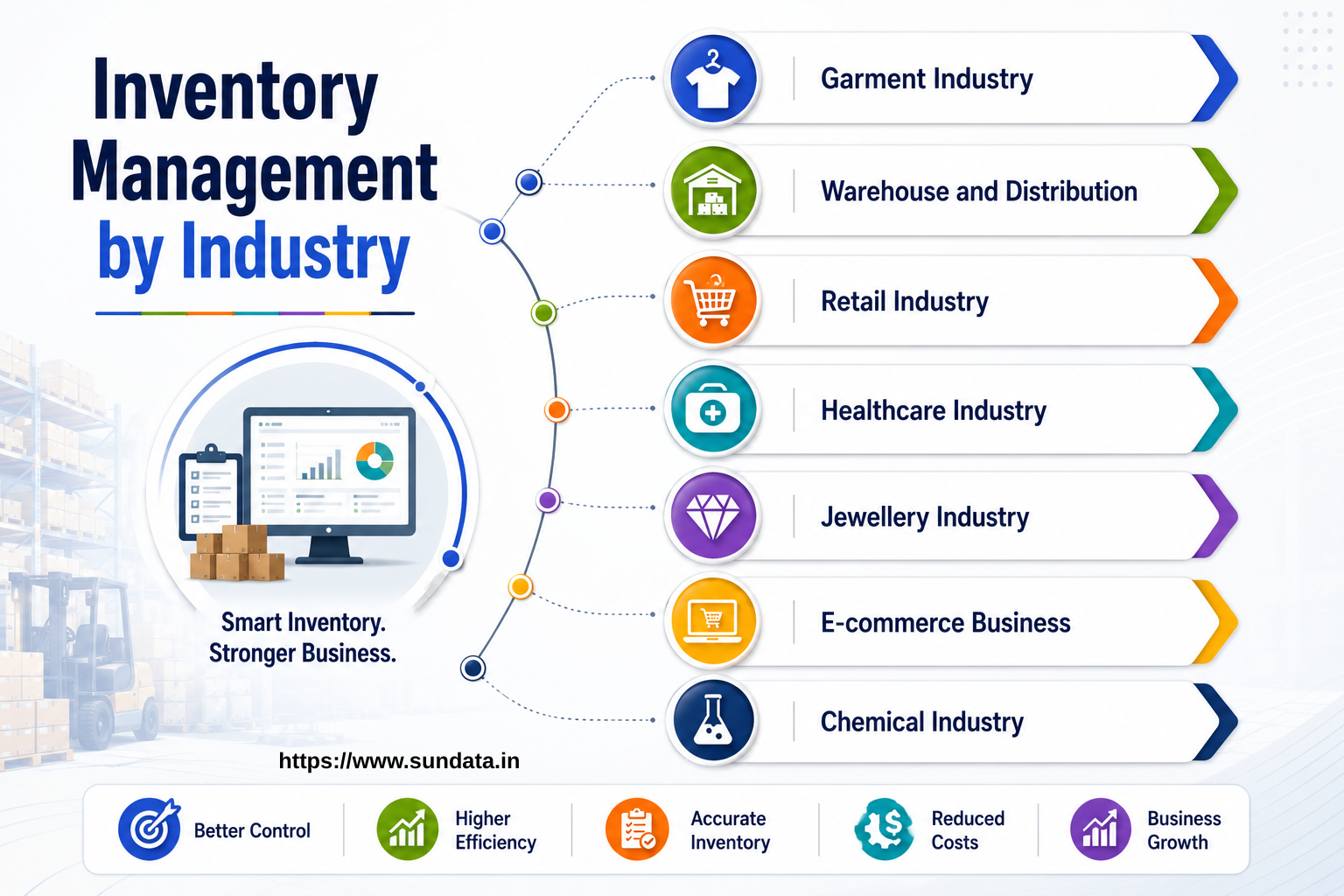
Inventory management requirements vary from one industry to another. Every business handles different types of products, stock volumes, and operational processes. An inventory management system can be customized to meet these unique needs while improving inventory accuracy and operational efficiency.
Garment Industry
Garment businesses handle products in different sizes, colors, styles, and seasonal collections. An inventory management system helps organize stock based on these variations, making it easier to manage inventory across warehouses and retail stores. Accurate stock visibility also improves order fulfillment and prevents stock shortages during peak demand.
Warehouse and Distribution
Warehouses manage large volumes of inventory every day. An inventory management system helps organize product storage, track inventory movement, and improve picking, packing, and dispatch operations. Barcode and RFID technology also increase inventory accuracy and reduce manual effort
Retail Industry
Retail businesses use inventory management software to track stock across stores and warehouses. Real-time inventory updates help prevent stockouts, improve product availability, and support faster order fulfillment for both online and offline sales.
Healthcare Industry
Hospitals, pharmacies, and medical suppliers use inventory management systems to manage medicines, medical devices, and healthcare supplies. Accurate inventory tracking helps maintain product availability while reducing waste caused by expired stock.
Jewellery Industry
Jewellery inventory includes high-value products that require precise tracking and security. An inventory management system helps record every item's details, including weight, purity, design, SKU, and storage location. Barcode or RFID technology improves inventory accuracy, simplifies stock verification, and reduces the chances of misplaced or missing items.
E-commerce Business
E-commerce companies rely on inventory management systems to manage products across multiple sales channels. The system updates stock automatically after every order, helping businesses maintain accurate inventory and deliver customer orders on time.
Chemical Industry
Chemical manufacturers and distributors manage a wide range of raw materials and finished products that require proper storage and traceability. An inventory management system helps track batch numbers, monitor stock levels, and maintain accurate inventory records. It also supports compliance by keeping a detailed inventory history and reducing the risk of stock errors.
Upcoming Trends in Inventory Management
Inventory management is changing with the adoption of advanced technologies that help businesses improve stock accuracy, reduce manual efforts, and manage operations more efficiently. Modern inventory solutions are focusing on automation, real-time data tracking, and smarter decision-making to meet the growing demands of businesses.
Artificial intelligence is helping businesses analyze inventory patterns, predict demand, and maintain optimal stock levels. Automation technologies such as smart warehouse solutions, robotic systems, and automated processes are reducing dependency on manual tasks while improving speed and accuracy. RFID technology is also gaining popularity as it enables faster inventory tracking and provides better visibility of product movement.
Cloud-based inventory solutions are becoming more common as businesses need access to real-time stock information across multiple locations. Predictive analytics helps companies forecast future demand and plan inventory accordingly. Integration with ERP, warehouse management, and sales systems further improves data flow and helps businesses make better operational decisions. The best inventory management system combines these modern technologies to support efficient, scalable, and future-ready inventory management.
How Sundata Helps Improve Inventory Management
Managing inventory efficiently requires accurate tracking, real-time visibility, and smooth coordination between different business operations. Sundata provides advanced inventory management solutions that help businesses simplify stock control, reduce manual efforts, and improve overall operational efficiency.
Sundata’s inventory management solution helps businesses track inventory movement from receiving to dispatch with better accuracy. The system supports barcode and RFID technology, allowing businesses to monitor products, maintain stock records, and reduce errors during daily operations.
With real-time inventory insights, businesses can easily monitor stock availability across warehouses and locations. Sundata helps optimize inventory processes by improving stock accuracy, reducing delays, and providing better control over warehouse activities.
The solution also supports integration with existing business systems, enabling smooth data flow between inventory, warehouse, sales, and other operations. By using the best inventory management system capabilities, Sundata helps businesses maintain the right inventory levels, improve productivity, and make faster decisions based on accurate data.
FAQ
1. Can an inventory management system manage multiple warehouses?
Yes, modern inventory management systems can manage stock across multiple warehouses and locations. Businesses can monitor inventory availability, transfer stock, and maintain centralized inventory records through a single platform.
2. What is the purpose of an inventory management system?
An inventory management system helps businesses maintain control over their stock by tracking product quantities, locations, and movements. It ensures accurate inventory records and helps businesses manage daily stock-related activities more efficiently.
3. Can an inventory management system track inventory in real time?
Yes, a modern inventory management system provides real-time inventory tracking. Businesses can view current stock levels, product locations, and inventory movement instantly across warehouses or storage facilities.
4. Is an inventory management system useful for small businesses?
Yes, an inventory management system is useful for small businesses as it helps organize stock records, reduce manual work, prevent stock shortages, and improve inventory planning as the business grows.
Conclusion
An inventory management system plays an important role in helping businesses maintain accurate stock records, improve operational efficiency, and manage inventory processes smoothly. From stock tracking and order processing to warehouse control and reporting, the right system helps businesses reduce manual efforts and make better decisions.
With the growth of automation, RFID, artificial intelligence, and cloud-based solutions, inventory management is becoming more advanced and efficient. Businesses across industries such as manufacturing, chemical, garment, jewellery, retail, and e-commerce can benefit from improved inventory visibility and better stock control.
The inventory management system helps businesses maintain the right stock levels, reduce operational costs, and improve overall productivity. Sundata delivers smart inventory management solutions that provide real-time visibility, support barcode and RFID technology, and simplify inventory operations, helping businesses build a more efficient and scalable supply chain.
