
A pharmaceutical warehouse handles products that need careful storage, accurate stock control, and timely movement. Even a small mistake in storage or inventory can affect product quality and business operations.
Pharmaceutical warehouse management helps businesses control medicines and other pharmaceutical products from receiving to dispatch. It covers storage conditions, stock tracking, expiry dates, batch details, and order handling.
A proper pharmaceutical warehouse management system can make these activities easier by keeping warehouse data organised and reducing manual work. This guide explains the key factors, inventory practices, and best practices that help maintain an efficient pharmaceutical warehouse.
Understanding Pharmaceutical Warehouse Management
Pharmaceutical warehouse management is the process of receiving, storing, tracking, and dispatching medicines and other pharmaceutical products in a controlled manner. It helps ensure that the right products are available in the right condition when needed.
A pharmaceutical warehouse needs more control than a regular warehouse. Products may have specific temperature, humidity, handling, batch, and expiry requirements. Proper warehouse management helps maintain these conditions throughout the storage process.
Pharmaceutical warehouse management also includes stock monitoring, batch tracking, expiry management, order processing, and movement of goods. These activities help reduce stock errors, product wastage, and delays in order fulfilment.
A pharmaceutical warehouse management system brings many of these activities into one system. It can provide real-time inventory information, track product movement, and help warehouse teams manage daily operations more accurately.
Why Is Pharmaceutical Warehouse Management Important?
Good warehouse management helps pharmaceutical businesses maintain product quality and keep stock records accurate. It also supports faster order processing and better control over products with different storage requirements.
In warehousing in the pharmaceutical industry, proper tracking is especially important because medicines often have limited shelf life. Knowing the batch, quantity, location, and expiry date of each product helps the warehouse team make better stock decisions.
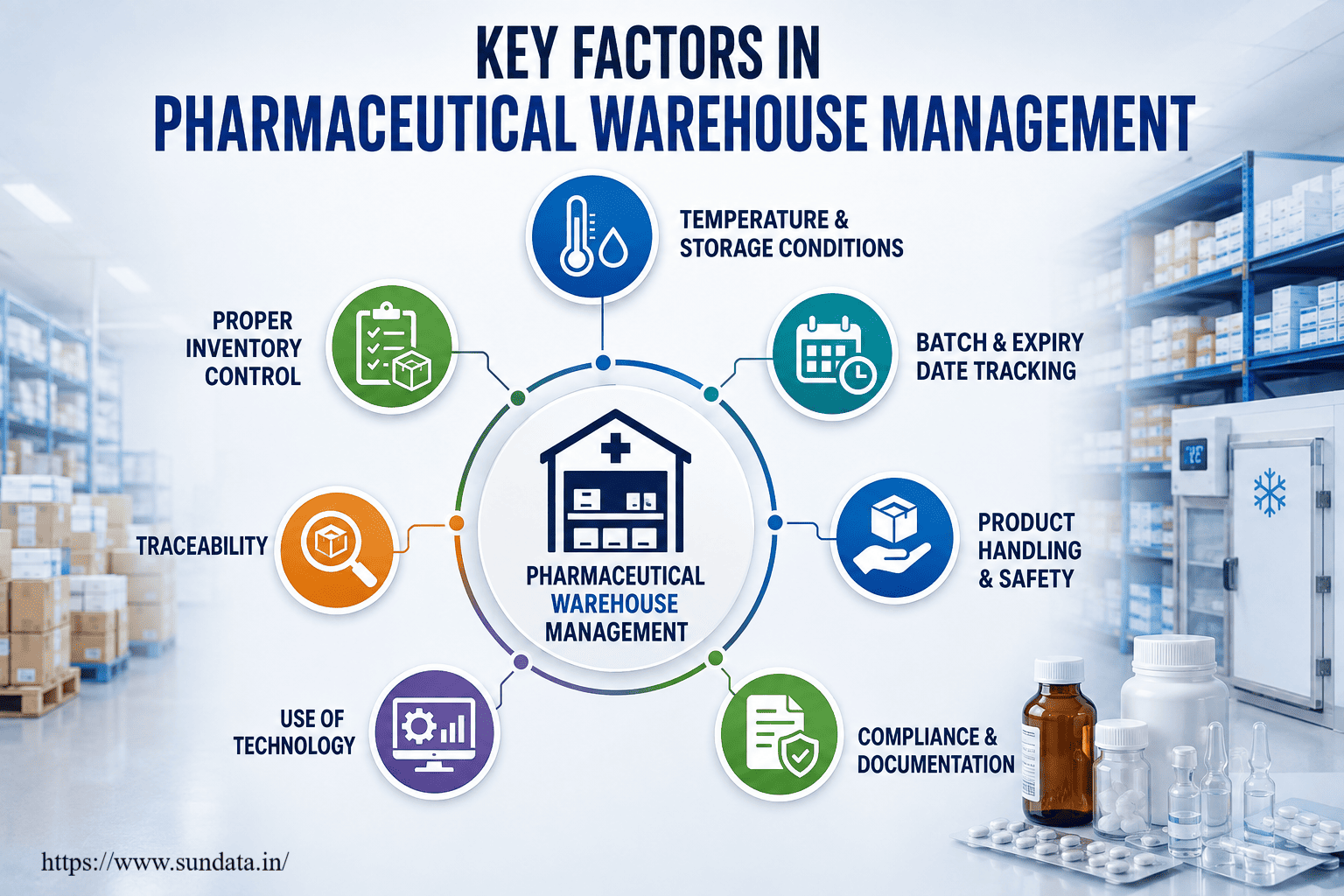
Key Factors in Pharmaceutical Warehouse Management
A pharmaceutical warehouse needs proper planning at every stage, from receiving products to dispatching orders. Several factors help maintain product quality, stock accuracy, and smooth warehouse operations.
Temperature and Storage Conditions
Many pharmaceutical products need specific temperature and humidity levels. Warehouses should have suitable storage areas and regular monitoring systems to keep products within the required conditions.
Batch and Expiry Date Tracking
Every batch should be recorded with its manufacturing and expiry details. This makes it easier to identify products and reduce the risk of expired medicines remaining in active stock.
Proper Inventory Control
Accurate stock records are important for knowing what products are available and where they are stored. Regular stock checks can also help identify shortages, excess stock, or differences between physical and system quantities.
Product Handling and Safety
Pharmaceutical products need careful handling during receiving, storage, picking, and dispatch. Clear storage locations and proper handling procedures can reduce product damage and operational errors.
Traceability
Each product movement should be recorded from the time it enters the warehouse until it is dispatched. This creates a clear record of product movement and supports better control across warehousing in pharmaceutical industry operations.
Compliance and Documentation
Pharmaceutical warehouses must follow applicable storage, handling, and documentation requirements. Proper records help warehouse teams maintain accountability and provide the information needed during audits or quality checks.
Use of Technology
Technology can reduce manual work and improve warehouse accuracy. A pharmaceutical warehouse management system can help manage inventory, batch information, expiry dates, warehouse locations, and order movements from a central platform.
 Managing Inventory in Pharmaceutical Warehouses
Inventory management is central to pharmaceutical warehouse operations. The warehouse team needs to know what stock is available, where it is stored, which batch it belongs to, and when it will expire.
Track Every Product and Batch
Each product should have clear information such as product name, batch number, quantity, manufacturing date, and expiry date. This information helps the team locate stock quickly and maintain accurate records.
Follow FEFO for Expiry Control
Pharmaceutical warehouses commonly use the FEFO (First Expired, First Out) method. Pick products with the nearest expiry date first. This helps reduce expired stock and unnecessary product wastage.
Monitor Stock Levels
Stock levels should be checked regularly to avoid both shortages and excess inventory. Minimum and maximum stock levels can help warehouse teams plan purchases and maintain the right quantity.
Use Barcode Scanning
Barcode scanning can make stock receiving, picking, and dispatch faster and more accurate. Each scan can update product movement and reduce errors caused by manual data entry.
Maintain Accurate Records
Physical stock and system records should match as closely as possible. Regular cycle counts and stock checks can help identify differences before they become larger inventory problems.
Best Practices for Implementing a Pharmaceutical Warehouse Management System
A warehouse management system can simplify many daily warehouse activities, but the right setup is important. Businesses should choose a system based on their products, warehouse processes, storage requirements, and future needs.
Define Warehouse Requirements
Start by listing the activities that need better control. These may include receiving, put-away, inventory tracking, batch management, expiry tracking, picking, packing, and dispatch.
Automate Routine Tasks
Manual data entry can lead to errors and take more time. Barcode scanning and automated stock updates can reduce repetitive work and improve the accuracy of warehouse records.
Set Up Batch and Expiry Controls
The system should record batch numbers, expiry dates, and product locations. Alerts for upcoming expiry dates can help warehouse teams take action before products become unusable.
Maintain Storage Visibility
Every product should have a defined warehouse location. A clear location structure helps staff find stock faster and reduces unnecessary movement inside the warehouse.
Train Warehouse Staff
Employees should understand how to use the system and follow the correct warehouse processes. Proper training helps reduce mistakes during receiving, picking, stock transfers, and dispatch.
Connect the System With Other Operations
A pharmaceutical warehouse management system can provide better results when it works with other business systems such as ERP, order management, procurement, or transportation platforms. This allows information to move smoothly between different operations.
Review Performance Regularly
After implementation, businesses should monitor stock accuracy, order processing time, picking errors, expiry-related wastage, and other important measures. Regular reviews can show where further improvements are needed.
A well-planned system supports better inventory control and gives businesses greater visibility across warehousing in pharmaceutical industry operations.
FAQ
1. Why is warehouse management important in the pharmaceutical industry?
It helps maintain product quality, control inventory, track batches and expiry dates, reduce stock errors, and ensure products are handled and stored correctly.
2. What does a pharmaceutical warehouse management system do?
A pharmaceutical warehouse management system helps manage activities such as receiving, stock tracking, batch management, expiry monitoring, warehouse locations, picking, and dispatch.
3. What is FEFO in pharmaceutical inventory management?
FEFO means First Expired, First Out. Under this method, products with the earliest expiry date are picked and dispatched first to help reduce expired stock and wastage.
4. How does technology help pharmaceutical warehouses?
Technology can improve stock visibility, reduce manual data entry, support barcode scanning, track product movement, and provide accurate inventory information.
Conclusion
Pharmaceutical warehouses need careful control at every stage of product handling. Proper storage, accurate inventory records, batch tracking, expiry management, and clear processes help maintain smooth warehouse operations.
A suitable pharmaceutical warehouse management system can bring these activities together and give teams better visibility of their stock and warehouse processes. Barcode scanning and automated tracking can also reduce manual errors and save time.
With the right processes and technology, businesses can manage pharmaceutical warehouse management more efficiently while maintaining better control over product quality, inventory, and order fulfilment.
