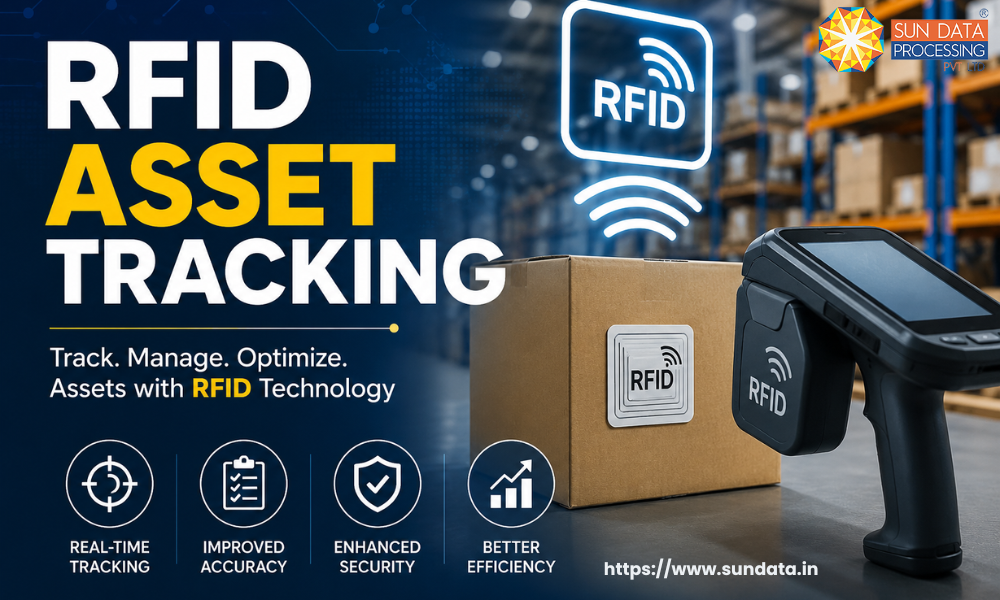
Managing business assets becomes difficult when teams handle a large number of tools, equipment, machines, or other valuable items. It can take time to know where each asset is located, who is using it, and whether it is available when needed.
RFID asset tracking provides a practical way to keep track of assets using RFID tags and readers. Businesses can capture asset information quickly without scanning each item manually.
An RFID asset tracking system can also reduce manual work, improve asset visibility, and help teams maintain more accurate records. This makes RFID useful for warehouses, manufacturing units, healthcare facilities, offices, and other businesses that manage many physical assets.
This guide explains how asset tracking with RFID tags works, the main components involved, its benefits, common applications, and the challenges businesses should consider before implementing an RFID-based solution.
What Is an RFID Asset Tracking System?
An RFID asset tracking system is a technology used to identify, locate, and manage physical assets with the help of RFID tags and readers. Each asset is assigned an RFID tag that stores a unique identification number.
The RFID reader captures the information from the tag using radio waves. This allows businesses to record asset movements without manually scanning every item. Depending on the system setup, multiple tagged assets can also be read at the same time.
An RFID asset tracking system usually connects RFID hardware with RFID asset tracking software. The software stores asset details, tracks movements, and gives teams a clear view of where assets are located and how they are being used.
With RFID for asset tracking, businesses can manage equipment, tools, inventory, returnable assets, IT equipment, and other valuable items more efficiently. It also helps reduce manual recordkeeping and the chances of misplaced assets.
How Does RFID Asset Tracking Work?
RFID asset tracking uses RFID tags, readers, antennas, and software to identify and track assets. The system captures asset information through radio signals and updates the information in the tracking software.
1. RFID Tag Is Attached to the Asset
Each asset is given a unique RFID tag. The tag contains an identification number that is linked to the asset's details in the tracking system. For example, a company can attach an RFID tag to a laptop, machine, tool, or warehouse equipment. The tag becomes the digital identity of that asset.
2. Asset Information Is Added to the System
The asset details are added to the RFID asset tracking software. This may include the asset name, ID, category, location, department, and other required information. Once the tag is linked with these details, the system can identify the asset whenever the RFID tag is read.
3. RFID Reader Sends Radio Signals
An RFID reader sends radio signals through an attached antenna. When a tagged asset comes within the reader's range, the tag receives the signal. The reader does not need to physically touch the asset to capture its information.
4. RFID Tag Responds to the Reader
The RFID tag sends its unique identification information back to the reader. Depending on the type of RFID tag, it may use energy from the reader's signal or its own internal battery to communicate. This allows RFID tag asset tracking to work without manually scanning each individual item.
5. Reader Sends Data to the Software
The RFID reader passes the captured tag information to the connected software. The system matches the tag ID with the asset record stored in the database. For example, if the reader detects the tag assigned to a particular machine, the software can identify that machine automatically.
6. Asset Movement Is Recorded
The system records where and when the asset was detected. If an asset moves from one area to another, RFID readers installed at different points can capture the movement. This gives businesses better visibility of asset tracking with RFID tags across warehouses, offices, production areas, or other locations.
7. Businesses Monitor Assets
The collected information can be viewed through the RFID asset tracking software. Teams can check asset locations, movement history, availability, and other relevant details from one place.
Key Components of an RFID System
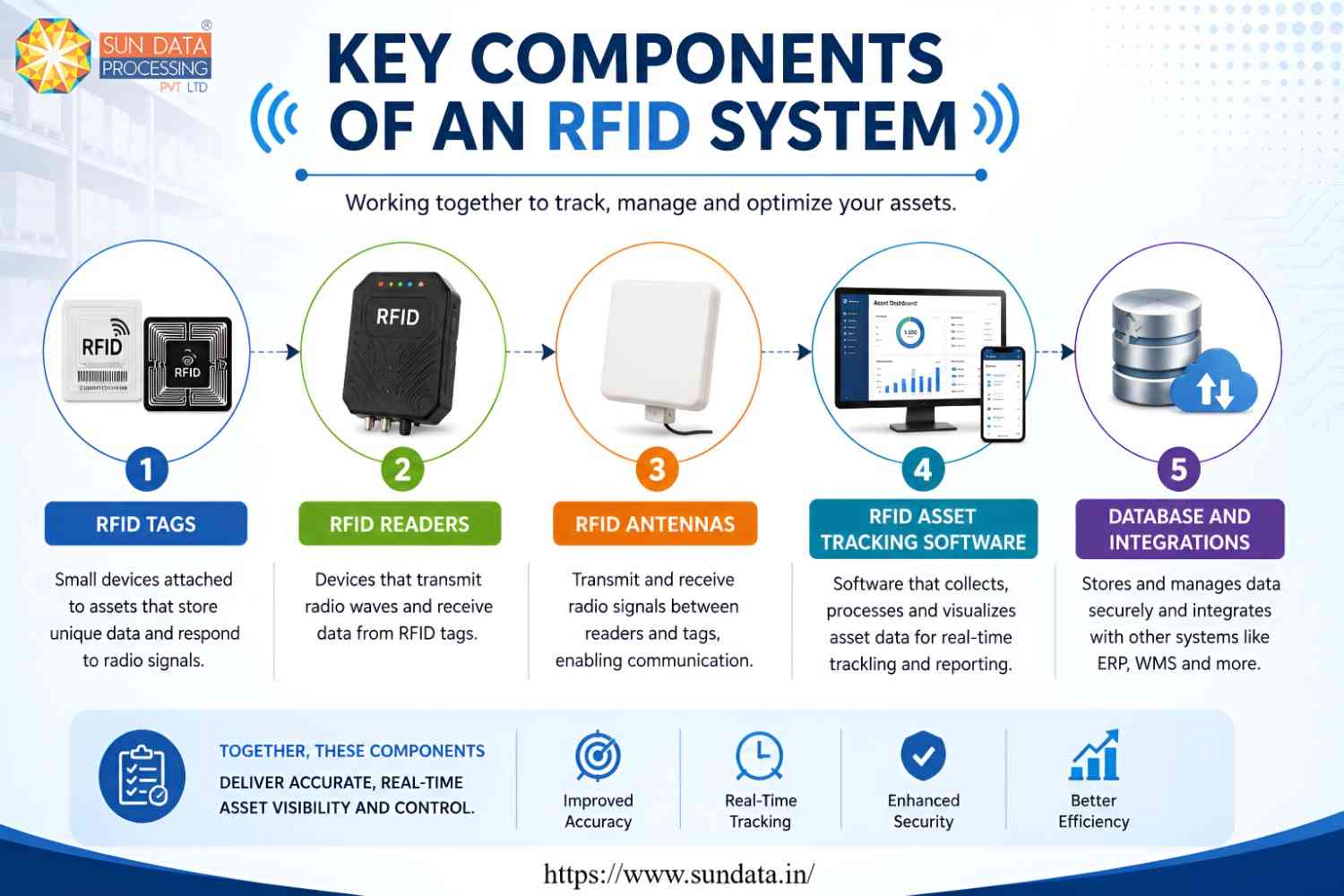
An RFID system uses several components that work together to identify and track assets. Each component has a specific role, from identifying the asset to storing and managing its information.
1. RFID Tags
RFID tags are attached to assets and contain a unique identification number. They can be fixed to equipment, tools, products, containers, or other items that need to be tracked. The type of tag depends on the asset, reading distance, and working environment.
2. RFID Readers
RFID readers capture information from nearby RFID tags. They send radio signals to the tags and receive the identification data in return. Readers can be placed at warehouse entry points, storage areas, production lines, or other locations where asset movement needs to be recorded.
3. RFID Antennas
Antennas help transmit radio signals between RFID tags and readers. Their position and range can affect how well the system reads tagged assets. A system may use one or more antennas based on the area that needs to be covered.
4. RFID Asset Tracking Software
RFID asset tracking software collects and manages the data received from RFID readers. It can store asset details, update locations, record movement history, and provide useful reports. This software acts as the central part of the RFID asset tracking system, helping teams manage asset information from one place.
5. Database and Integrations
The system needs a database to store asset records and tracking information. RFID solutions can also connect with existing business software such as ERP, WMS, or inventory systems.
Benefits of RFID Asset Tracking
Businesses often manage hundreds or thousands of assets across different locations. Manual tracking can make it difficult to maintain accurate records and quickly find the right asset. RFID asset tracking solutions help businesses automate much of this work.
1. Faster Asset Tracking
RFID readers can identify multiple tagged assets without requiring each item to be scanned separately. This saves time during asset checks, movement, and inventory activities.
2. Better Asset Visibility
Businesses can get a clearer view of where their assets are located. Teams can check asset status and movement through the tracking system instead of relying only on manual records.
3. Less Manual Work
Asset tracking with RFID tags reduces the need for employees to record every asset movement by hand. Automated data capture also helps teams spend less time on routine tracking tasks.
4. Fewer Errors
Manual data entry can lead to missed records or incorrect information. RFID captures asset data electronically, which can help reduce common tracking and recording errors.
5. Easier Asset Management
An RFID system keeps important asset information in one place. Teams can use the software to check asset details, movement history, location, and status when required.
6. Reduced Asset Loss
Regular tracking makes it easier to identify missing or misplaced assets. Businesses can also monitor asset movement between different areas and take action when an item is not where it should be.
7. Better Use of Business Assets
When businesses know which assets are available and where they are being used, they can make better use of existing equipment. This can reduce unnecessary purchases and improve asset utilization.
What Are the Different Types of RFID Tags?
RFID tags are available in different types based on how they receive power, how far they can be read, and where they are used. Choosing the right tag is important for reliable RFID for asset tracking.
1. Passive RFID Tags
Passive RFID tags do not have their own battery. They receive power from the radio signal sent by an RFID reader and then send their stored information back to the reader. These tags are generally smaller and cost-effective, making them suitable for many RFID tag asset tracking applications.
2. Active RFID Tags
Active RFID tags have their own internal battery. This allows them to send signals over longer distances compared with passive tags. They are useful for tracking high-value equipment, vehicles, large containers, and assets that need regular location monitoring.
3. Semi-Passive RFID Tags
Semi-passive RFID tags have a battery that powers certain functions within the tag, such as sensors or memory. The RFID reader still communicates with the tag to capture its information. These tags can be useful when assets need additional monitoring, such as temperature or environmental condition tracking.
4. On-Metal RFID Tags
On-metal RFID tags are designed to work when attached to metal surfaces. Standard RFID tags may not perform well when placed directly on metal. These tags are suitable for tracking machinery, tools, IT equipment, metal containers, and other metal assets.
5. Rugged RFID Tags
Rugged RFID tags are built to handle demanding environments. They can be designed to withstand factors such as dust, moisture, impact, heat, or chemicals. Businesses can use them for asset tracking with RFID tags in manufacturing plants, warehouses, construction sites, and other harsh working environments.
Applications of RFID Asset Tracking Systems
RFID asset tracking solutions are useful in industries where businesses need to manage equipment, tools, machines, and other valuable assets. The system helps teams know where assets are located and how they are being used.
1. Warehouses and Logistics
Warehouses can use RFID for asset tracking to monitor pallets, containers, tools, equipment, and other reusable assets. RFID readers can capture asset movements when items pass through storage areas or entry and exit points.
This reduces the need for manual tracking and helps warehouse teams maintain more accurate asset records. Logistics companies can also use RFID to track assets as they move between different locations.
2. Manufacturing and Production
Manufacturing companies can use asset tracking RFID technology to monitor machines, tools, production equipment, and reusable containers. RFID tags can help identify assets as they move between production areas, storage locations, and maintenance departments.
The system gives teams better visibility of equipment availability and movement. It can also help reduce the time spent searching for tools and production assets.
3. Healthcare and Hospitals
Hospitals manage many movable assets, including medical equipment, wheelchairs, beds, and other devices. RFID tags can be attached to these assets so staff can identify and track them more easily.
An RFID asset tracking system can show where equipment was last detected and help staff locate items when they are needed. This can also support better asset utilization and record keeping.
4. IT and Office Assets
Businesses can use RFID to manage laptops, computers, printers, servers, and other office equipment. Each item can have a unique RFID tag linked to its asset record.
Teams can use RFID asset tracking software to maintain information about asset location, department, status, and movement. This is useful for companies managing large numbers of IT and office assets.
5. Construction and Field Operations
Construction companies often move tools, machines, and equipment between different project sites. RFID tags can help teams keep track of these assets during transfers and daily operations. The system can provide information about asset movement and location, which makes it easier to identify missing or misplaced equipment. It can also support better use of equipment across multiple projects.
Challenges in RFID Asset Tracking Systems
RFID asset tracking can simplify asset management, but businesses may face a few practical challenges. Proper planning and the right system setup can help avoid most of these issues.
1. Initial Setup Cost
RFID requires tags, readers, antennas, software, and other equipment, which can increase the initial investment. Businesses should plan the system based on their asset volume and tracking requirements.
2. Reading Issues
Metal, liquids, and other environmental factors can affect RFID signal performance. The right tag type and proper reader placement can help maintain reliable readings.
3. Choosing the Right Tags
Different assets may require different RFID tags based on their material, size, and operating environment. Businesses should select tags that are suitable for the assets being tracked.
4. System Integration
The RFID system may need to connect with existing ERP, WMS, or asset management software. Proper integration helps keep asset data updated across different business systems.
5. Employee Training
Employees need basic training to use RFID equipment and RFID asset tracking software correctly. Clear processes and simple training can help teams use the system properly.
How Sundata RFID Asset Tracking System Helps Businesses
Sundata provides businesses with an RFID-based approach to manage and track physical assets. It helps teams keep asset information organized while reducing the need for manual tracking.
1. Centralized Asset Information
Sundata can keep important asset details in one system, making it easier for teams to check asset records and status. This gives businesses a single place to manage their RFID asset tracking data.
2. Faster Asset Identification
RFID technology allows tagged assets to be identified through radio signals without manually scanning each item. This can save time when businesses handle a large number of assets.
3. Better Asset Visibility
Sundata helps businesses monitor asset movement and maintain better visibility across different locations. Teams can use this information to locate assets and keep track of their usage.
4. Reduced Manual Work
The system captures RFID data automatically, reducing the need for employees to record every asset movement manually. This allows teams to spend less time on routine asset tracking activities.
5. Improved Asset Records
Sundata can help businesses maintain organized records for their equipment, tools, machines, and other assets. Accurate records make it easier to manage asset status, movement, and availability.
6. Support for Business Operations
RFID asset tracking can be useful across warehouses, manufacturing units, healthcare facilities, offices, and other operations. Sundata helps businesses bring asset tracking into their regular workflow.
FAQ
1. What is RFID asset tracking used for?
RFID asset tracking is used to identify, monitor, and manage physical assets such as equipment, tools, machines, containers, and IT devices.
2. How does RFID track an asset?
An RFID tag is attached to the asset and linked to its details in the tracking software. When a reader detects the tag, the system records the asset information and movement.
3. Do RFID tags need to be scanned manually?
No, RFID tags can be read through radio signals without direct contact or manual scanning. This can make asset tracking faster than traditional methods.
4. Can RFID tags be used on metal assets?
Yes, but standard RFID tags may not work properly on metal surfaces. On-metal RFID tags are designed specifically for tracking equipment and other metal assets.
5. Is RFID asset tracking suitable for small businesses?
Yes, RFID can be suitable for small businesses when they need to manage valuable equipment, tools, inventory, or other physical assets. The system can be scaled based on the business requirement.
Conclusion
RFID asset tracking gives businesses a practical way to manage physical assets with less manual effort. RFID tags, readers, antennas, and software work together to record asset information and movement.
From warehouses and manufacturing to healthcare and offices, asset tracking with RFID tags can improve visibility and help teams maintain better asset records. The right RFID tags and system setup are important for reliable performance.
For businesses looking for a structured way to manage their assets, RFID asset tracking solutions can support faster identification, better tracking, and smoother daily operations.
