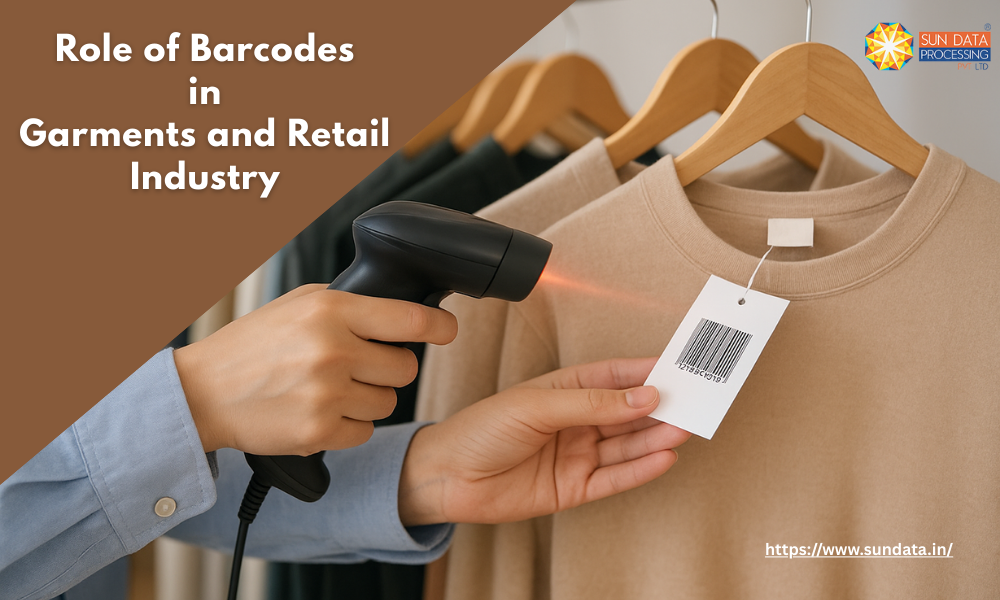
Barcodes in the garments and retail industry have completely changed the way businesses handle their daily operations. From tracking stock to billing at counters, barcodes have made processes faster, smarter, and more reliable. Whether it is a small clothing shop or a large retail chain, barcodes and QR codes help reduce errors, save time, and give store owners better control over their inventory. In today’s fast-moving fashion and retail world, managing products without such technology is almost impossible, as it ensures smooth transactions and customer satisfaction.
In this blog, we will understand what barcodes and QR codes are, how they work, and why they are so important in the garments and retail industry. We will also look at the different types of barcodes used, their benefits, and the key factors to consider when choosing the right barcode solution. Finally, you’ll learn how Sundata simplifies inventory management systems with its smart barcode systems, making life easier for garment businesses and retail stores.
What are Barcodes & QR Codes?
Barcodes and QR codes are simple yet powerful tools that help businesses identify and manage products with ease. A barcode is a series of lines and spaces that represent numbers or data. When scanned, it quickly provides information about a product, such as its price, size, or stock number. On the other hand, a QR code (Quick Response code) is a square-shaped code made of patterns that can hold much more data than a barcode. While barcodes are mostly used for pricing and inventory in the garments and retail industry, QR codes are becoming popular for sharing detailed product information, promotions, or even guiding customers to websites. Both these codes play an important role in making retail operations faster and smoother.
Components of a Barcode
Barcodes in the garments and retail industry are not just random black lines; they are designed with specific parts that allow scanners to read and process data correctly. Each component plays an important role in ensuring smooth operations in shops, warehouses, and billing counters.
Bars and Spaces
The main part of a barcode is the pattern of black bars and white spaces. These patterns represent numbers or letters, which the scanner converts into product information like size, price, or stock number. In garment stores, this helps identify different clothing items quickly without manual entry.
Quiet Zone
A quiet zone is the blank space before and after the barcode. Though it may look unimportant, this gap ensures the scanner can detect the beginning and end of the code correctly. Without a quiet zone, scanners may give errors, leading to wrong billing or stock updates in retail.
Start and Stop Characters
Every barcode has start and stop characters, which signal the scanner where the code begins and ends. This makes the scanning process faster and more reliable, especially in busy garment and retail shops where hundreds of products are scanned daily.
Check Digit
Most barcodes contain a check digit, which is a special number used to verify that the barcode has been read correctly. If there’s an error in scanning, the check digit prevents wrong data from entering the system. This is crucial in inventory systems where accuracy is a must.
Human-Readable Numbers
Below the lines, you often see numbers printed in plain text. These human-readable numbers act as a backup, allowing staff to enter product details manually if the scanner is not working. In retail shops, this ensures smooth operation even during technical issues.
How Barcodes and QR Codes Work?
Barcodes and QR codes in the garments and retail industry act like digital languages that machines can understand. While they look simple on the outside, the way they work is based on clear steps that connect products with data in the store’s system.
Scanning the Code
A barcode scanner or a QR code reader shines light onto the code. The black bars or patterns absorb the light, while the white spaces reflect it. The scanner then detects these differences and translates them into a digital signal.
Converting to Data
The scanner’s digital signal is converted into numbers or letters. For example, a barcode on a T-shirt may store a product code like “TSH123.” The system instantly matches this code with details such as color, size, price, and stock status in the database.
Updating the System
Once the data is read, it automatically updates the point-of-sale (POS) system or the inventory management software. This step makes billing faster and helps track how many items are sold or left in stock. In garment warehouses, this process ensures real-time stock updates.
Difference Between Barcode and QR Code Function
- Barcodes usually carry smaller amounts of data, mainly product numbers or pricing information.
- QR codes, however, can store larger details such as web links, product guides, or promotional offers. In retail, QR codes are often used for marketing or to give customers extra product information.
By following these steps, barcodes and QR codes make the garment and retail industry more organized, accurate, and customer-friendly.
Types of Barcodes & QR Codes Used in Garment & Retail Industry
In the garments and retail industry, different types of barcodes and QR codes are used depending on the business need. Some are designed for quick billing at retail counters, while others are built to handle bulk stock management or customer engagement. Here are the most common types:
UPC (Universal Product Code)
UPC barcodes are widely used in garment stores and supermarkets. They carry basic product details like item number and price. In clothing shops, UPCs are usually printed on tags to make the checkout process faster and error-free. Since they are recognized worldwide, UPC codes are especially useful for global garment brands.
EAN (European Article Number)
EAN barcodes work much like UPC codes but are more common in Europe and international retail. For fashion businesses that sell across different countries, EAN codes ensure smooth billing and stock tracking across borders. This makes them a favorite for export-focused garment companies.
Code 128
Code 128 is a high-density barcode that can store a larger amount of information compared to UPC and EAN. It is commonly used in warehouses and garment supply chains to record details such as batch numbers, supplier names, and shipping information. This helps retailers and manufacturers track garments from production to delivery with great accuracy.
QR Codes (Quick Response Codes)
QR codes are gaining popularity in the garment and retail industry because they can store much more information than regular barcodes. Retailers print them on clothing tags, packaging, or posters. Customers can scan them to access product care instructions, styling tips, discount offers, or even direct links to online stores. This adds value to the shopping experience and builds a stronger connection between brands and buyers.
Data Matrix Codes
Data Matrix codes are two-dimensional codes similar to QR codes but smaller in size. They are often used for tagging small garment accessories like buttons, labels, or zippers. Since they can hold a lot of data in a small space, they are highly reliable in tracking fine details in garment manufacturing and quality control.
Benefits of Barcodes & QR Codes in Garment & Retail Industry
Barcodes and QR codes are not just simple tags; they bring multiple benefits that help retailers and garment businesses run smoothly. From fast billing to better customer service, these tools play a vital role in daily operations. Here are the key benefits:
Faster Billing and Checkout
One of the biggest benefits of barcodes in the garments and retail industry is speed at the billing counter. Instead of typing product details manually, a quick scan brings up the item’s price, size, and code in seconds. This reduces waiting time for customers and improves their shopping experience.
Improved Accuracy
Manual entry often causes mistakes like wrong pricing or incorrect product details. With barcodes and QR codes, the chances of errors drop significantly. Each scan records the right data, ensuring accurate billing and stock updates, which is critical for both small boutiques and large retail stores.
Better Inventory Management
Barcodes make it easy for retailers to monitor stock in real time. Each scan updates the inventory system, showing how many items are sold and what is still available. This prevents problems like overstocking or running out of popular clothing items. In garment warehouses, this also helps track products during shipping and storage.
Cost Savings
Since barcode and QR code systems reduce manual work, businesses can save money on extra staff for data entry. The technology also reduces errors, which means less money lost due to wrong billing or misplaced stock. Over time, this makes retail operations more cost-efficient.
Customer Engagement with QR Codes
QR codes offer more than just product details. Many fashion retailers use them on tags or packaging to give styling tips, washing instructions, loyalty rewards, or discount coupons. This extra value builds trust and keeps customers coming back for more.
Supply Chain Tracking
For garment exporters and large retail chains, barcodes and QR codes make it possible to track products across the supply chain. From manufacturing units to warehouses and finally to the retail floor, every step can be monitored with a simple scan. This ensures transparency and reliability in product handling.
Factors to Consider While Choosing Barcodes for Garments and Retail Industry
Choosing the right type of barcode is an important decision for garment businesses and retailers because it directly affects billing, inventory, and customer satisfaction. Not all barcodes serve the same purpose, and the wrong choice can lead to scanning errors or poor stock management. Here are the main factors to keep in mind:
Type of Products
Garment items like shirts, trousers, and dresses may need simple UPC or EAN barcodes for pricing, while accessories or export items may require Code 128 or Data Matrix barcodes for detailed tracking. The type of product should guide the barcode selection.
Printing Material and Durability
Barcodes must be printed on labels or tags that can handle wear and tear. In the garments and retail industry, tags may go through folding, ironing, or washing tests. Durable printing ensures the code remains readable until the product is sold.
Scanner Compatibility
Not all scanners can read every type of barcode or QR code. Retailers must check whether their POS (Point of Sale) systems and scanners are compatible with the barcode format they choose. This avoids disruptions at billing counters.
Data Capacity
Some barcodes, like UPC, store only limited details such as product number and price, while QR codes or Code 128 can hold more information like supplier details or promotional offers. Retailers must decide based on how much data they need to store.
Cost of Implementation
Barcode systems are cost-effective in the long run, but initial setup costs vary depending on the type of code, label quality, and scanner technology. Businesses should balance budget, durability, and efficiency while making their choice.
Industry Standards
For garment exporters, following global standards like EAN or GS1 ensures products are accepted worldwide without scanning issues. Using the right standard helps in smooth trade across different countries and retailers
How Sundata Simplifies Inventory with Smart Barcode Solutions?
Sundata makes it easier for garment and retail businesses to manage their products by offering a complete package of barcode printers, scanners, POS systems, and inventory management tools. Barcode printers create durable tags and labels for clothing items like shirts, trousers, and accessories, ensuring every product is properly marked for fast identification. At the billing counter, Sundata’s POS systems allow quick barcode scanning, reduce customer waiting times, and eliminate errors in pricing or stock updates. Retailers can also rely on Sundata’s inventory management software to get real-time stock visibility, track sales patterns, and avoid both shortages and overstocking. Sundata provides thermal barcode printers for labels and tags, along with handheld and desktop barcode scanners, which are widely used in garment shops, warehouses, and retail chains.
In warehouses and supply chains, Sundata’s barcode scanners help track the movement of garments from production to delivery. These scanners work with multiple barcode and QR code formats, making them reliable for both small garment stores and large retail chains. With seamless integration between barcode solutions and retail management systems, businesses can generate clear reports, manage stock efficiently, and ensure transparency across all operations. By combining these tools, Sundata provides an all-in-one solution that saves time, reduces costs, and improves customer experience in the garments and retail industry.
FAQs
1. Are barcodes cost-effective for small garment shops?
Yes, barcode systems are affordable, reduce manual work, and save money by preventing billing mistakes.
2. Do barcodes work on all types of clothing products?
Yes, barcodes can be printed on labels, tags, or packaging for almost all types of garments and accessories.
3. What happens if a barcode cannot be scanned?
Most barcodes have human-readable numbers printed below, so staff can enter details manually.
4. Can Sundata’s barcode solutions integrate with existing POS systems?
Yes, Sundata ensures its solutions easily integrate with retail and inventory software already used by businesses.
5. What types of printers and scanners are used in retail?
Retailers often use thermal barcode printers to print tags and labels, and handheld or desktop barcode scanners at billing counters and warehouses.
Conclusion
Barcodes and QR codes have become the backbone of the garments and retail industry. They make everyday tasks like billing, labeling, and stock tracking faster, easier, and more reliable. From small garment shops to large retail chains, barcode technology ensures that every product is well-organized, sales are accurate, and customers get a smooth shopping experience
Sundata takes this one step further by offering a full range of smart solutions, including barcode printers, scanners, POS systems, and inventory management software. With these tools, retailers can reduce errors, cut costs, and run their business with better control and confidence. By choosing Sundata’s barcode solutions, garment and retail businesses get a trusted partner to simplify operations and grow in a competitive market.
