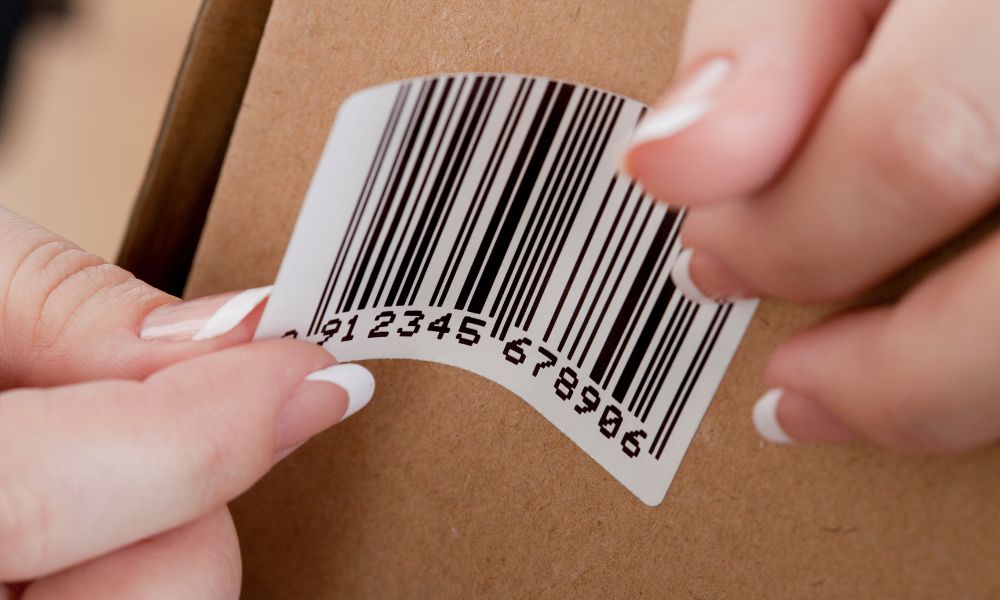
In today’s fast-paced business environment, data accuracy and speed matter more than ever. Whether it’s tracking shipments in logistics or managing products in a warehouse, businesses rely on barcodes to keep operations efficient. Among the different types of barcodes, 2D barcodes have become increasingly important due to their ability to hold more information in a compact space.
From retail stores to healthcare facilities and manufacturing units, 2D barcodes are used across industries to support accurate scanning, smooth inventory management, and real-time tracking. Paired with modern barcode scanners, these codes help reduce manual errors and speed up data entry processes. This blog will explain what 2D barcodes are, how they work, their key benefits, and where they are commonly used especially in sectors like logistics and inventory control.
What is 2D Barcode?
A 2D barcode, or two-dimensional barcode, is a graphical image that stores information both horizontally and vertically. Unlike traditional 1D barcodes, which use parallel lines to represent data, 2D barcodes use patterns of squares, dots, or other shapes arranged in a square or rectangular grid. This design allows them to hold significantly more information in a much smaller space. These barcodes can store various types of data, such as product information, serial numbers, URLs, and even entire documents or payment details. To read a 2D barcode, barcode scanners equipped with imaging technology are used. These scanners capture the entire code in one scan, allowing for faster and more accurate data processing.
Some of the most widely recognized 2D barcodes include QR codes and Data Matrix codes, which are often seen on product packaging, shipment labels, and marketing materials.
Different Types of 2D Barcodes
2D barcodes are available in several formats, each developed for specific business needs. These barcodes can carry a wide range of data from text and numbers to full URLs and transaction details while occupying minimal space. Depending on the application, businesses can choose the barcode type that best fits their environment and scanning setup.
Below are some of the most commonly used 2D barcodes across industries:
QR Code (Quick Response Code)
QR codes are the most familiar type of 2D barcode, easily recognizable by their square shape and distinctive black-and-white pattern. They were originally developed for the automotive industry but are now widely used across various sectors. These codes can store website links, product data, payment information, and even Wi-Fi passwords. One of their key advantages is error correction, which allows them to be scanned even if part of the code is smudged or damaged.
Use Cases: Retail promotions, digital payments, contactless menus, logistics tracking, and mobile app links.
Data Matrix
Data Matrix codes are designed for small spaces and high-speed scanning. These square-shaped codes can store large amounts of data in a tiny area, making them ideal for items like small electronic components or medical devices. They also offer strong error correction, allowing reliable scanning in industrial or medical environments where codes may be exposed to dust, chemicals, or physical wear.
Use Cases: Medical tools, electronics manufacturing, automotive parts, and pharmaceuticals.
PDF417
PDF417 is a stacked linear barcode capable of holding detailed information, such as driver’s license data, fingerprints, or full text records. It resembles a traditional barcode but with stacked rows of data. It is well-suited for documents that require secure and high-volume data encoding, particularly when a standard barcode doesn’t provide enough space.
Use Cases: Government-issued IDs, shipping forms, boarding passes, and asset tracking in warehouses.
Aztec Code
Aztec codes are compact and efficient, designed to work even when printed at low resolution. They don’t need a quiet zone (blank margin) around the code, which gives them an advantage when space is limited. These codes are widely used in transportation and ticketing systems, especially where fast scanning is required.
Use Cases: Train tickets, airline boarding passes, digital passes, and transport QR-based access.
MaxiCode
MaxiCode, developed by UPS, is a circular 2D barcode with a bullseye in the center. It’s designed for high-speed scanning on packages that are in motion, such as those on conveyor belts. The code remains readable even in rough logistics environments and helps streamline shipment sorting and tracking.
Use Cases: Express shipping labels, warehouse logistics, and automated sorting systems.
1D Barcodes vs 2D Barcodes: Key Differences
Barcodes have long played a crucial role in data capture systems across industries. However, not all barcodes are the same. The two main categories 1D (one-dimensional) and 2D (two-dimensional) barcodes differ significantly in how they store data, how they are scanned, and where they are used.
Below is a detailed comparison to help understand which barcode type fits which business need:
Data Storage Capacity
- 1D Barcodes store data in a linear sequence using vertical bars and spaces. The information is typically limited to around 20–25 characters, which may include product IDs, batch numbers, or SKUs. This limitation makes them suitable for simple, numeric-based applications.
- 2D Barcodes, on the other hand, use both horizontal and vertical patterns to store data. Depending on the type, they can hold hundreds to thousands of characters. This allows businesses to encode complex information such as URLs, product specifications, customer data, or encrypted records all in a small code.
Physical Size and Space Efficiency
- 1D Barcodes become longer as more data is added. This can be an issue on smaller packaging or when trying to label small components. Their size can also make them hard to print in tight spaces.
- 2D Barcodes are more compact and can store large amounts of data in a square or rectangular format. For example, a small QR code on a business card can store a full contact profile, while a Data Matrix on a microchip can carry tracking or manufacturing details.
Scanning Method
- 1D Barcodes require a laser-based scanner that reads the bars from left to right. These scanners need a clear line of sight and can struggle with faded or curved surfaces.
- 2D Barcodes are scanned using image-based barcode scanners or camera-equipped mobile devices. These scanners take a full image of the code, making them more adaptable to various angles, damaged surfaces, and poor lighting conditions.
Orientation and Readability
- 1D Barcodes must be aligned horizontally with the scanner to be read. If the code is tilted, too small, or printed poorly, scanning may fail.
- 2D Barcodes can be read from any angle horizontal, vertical, or even diagonal. Many 2D codes also come with error correction, meaning they can still be read even if a portion is scratched, smudged, or missing.
Types of Data Stored
- 1D Barcodes are suitable for basic product identifiers or numeric sequences, such as UPCs used in retail. They don’t support images, complex instructions, or secure encryption.
- 2D Barcodes can handle diverse data formats like contact details, web links, geolocation, login credentials, or health records. This makes them ideal for dynamic and high-volume data environments such as logistics, inventory management, and customer engagement.
Cost and Implementation
- 1D Barcode systems are generally less expensive to implement, especially in environments where simple labeling and tracking are enough. Basic laser scanners are affordable and widely available.
- 2D Barcode systems may require an upfront investment in imaging-based scanners or mobile scanning apps. However, they provide long-term value by reducing errors, minimizing space usage, and enabling access to richer datasets.
Understanding How 2D Barcodes Work
2D barcodes are designed to hold more information in less space. To understand how they work, it’s important to look at both the way they are structured and how they are read by barcode scanners or camera-based systems.
While 1D barcodes rely on a linear sequence of vertical bars, 2D barcodes store data across two dimensions horizontally and vertically. This dual-axis structure allows them to encode complex and larger volumes of information using a compact design.
Let’s break down how 2D barcodes work step by step.
How Data is Stored in 2D Barcodes
2D barcodes store data using patterns of squares, dots, or other shapes arranged in a grid. Each small unit, called a module, holds a bit of information. Unlike 1D barcodes that hold data in one direction, 2D barcodes store information both horizontally and vertically. This allows them to carry much more data, including text, numbers, or web links. They can even store encrypted or binary data depending on the format used.
Scanning Mechanism of 2D Barcodes
2D barcodes are scanned using imaging devices like camera-based barcode scanners or smartphones. These scanners capture the entire barcode in one image instead of reading line-by-line. This enables faster and more flexible scanning from any angle. Even slightly damaged or wrinkled barcodes can be read accurately using this method.
Decoding Process
After the barcode image is captured, decoding software processes the visual patterns to extract information. It identifies each module and translates the pattern into digital data. The binary data is then converted into readable content such as product info, contact details, or a URL. The process is fast and usually happens in real-time.
Error Correction Capabilities
2D barcodes have built-in error correction, which means they can still be read even if they’re partially damaged or dirty. Formats like QR codes use special mathematical formulas to restore lost data. Depending on the level of correction, up to 30% of a barcode’s data can be missing and still recoverable. This makes them highly reliable in harsh environments.
Compatibility with Modern Devices
2D barcodes are easily readable using modern smartphones, tablets, and camera-based scanners. Many free apps and default phone cameras support 2D barcode scanning. This flexibility means businesses don’t need costly equipment to use them. They're widely used in both industrial and consumer-facing applications.
Benefits of 2D Barcodes for Your Business
2D barcodes offer several practical advantages across industries, especially in operations like inventory management, logistics, and product tracking. Their ability to hold more data in a smaller space and be read by smartphones or advanced barcode scanners makes them a smart choice for modern businesses.
Compact Yet Data-Rich
Unlike traditional 1D barcodes, 2D barcodes can store large volumes of data including names, prices, serial numbers, URLs, or encryption codes within a small label. This means you can fit more information on a product tag without needing extra space.
Faster and More Reliable Scanning
2D barcodes are scanned using camera-based or imaging barcode scanners, which can read the code from any angle and even when damaged or smudged. This increases speed and reduces errors during scanning, improving operational efficiency in warehouses and retail stores.
Cost Efficiency
Since many 2D barcodes can be scanned using smartphones or inexpensive camera-based devices, businesses can reduce their dependence on bulky and costly laser scanners. This results in lower setup and maintenance costs for barcode infrastructure.
Improves Inventory Management
2D barcodes simplify the tracking of goods by storing more detailed product information. Inventory systems can quickly scan items, update stock levels, and maintain accurate records. This helps avoid stockouts, improve order accuracy, and streamline supply chain workflows.
Supports Contactless Transactions
In sectors like retail, hospitality, and healthcare, 2D barcodes enable safe, touch-free transactions. From digital menus to contactless payments and check-ins, businesses can reduce physical contact while.
Industries That Use 2D Barcodes
2D barcodes are widely used across multiple industries due to their ability to store detailed information in a compact format. Their compatibility with modern barcode scanners and mobile devices has made them an essential tool in various sectors.
Retail and E-commerce
In retail, 2D barcodes are used for labeling products, managing prices, tracking inventory, and enabling self-checkout systems. They also help e-commerce businesses manage order fulfillment, returns, and shipping.
Logistics and Supply Chain
For the logistics industry, 2D barcodes allow accurate tracking of shipments, assets, and cargo. They help in route optimization, real-time updates, and reduce delivery errors, improving overall supply chain efficiency.
Garments and Apparel Industry
2D barcodes are increasingly used in the garments industry to streamline inventory tracking and product labeling. Each piece of clothing can be tagged with a 2D barcode that includes detailed information such as size, color, fabric type, price, and SKU. These barcodes help retailers manage stock across multiple outlets, reduce manual errors, and simplify return and exchange processes.
Healthcare
Hospitals and clinics use 2D barcodes for labeling medications, managing patient records, and verifying medical equipment. It ensures accurate tracking and minimizes risks of errors in treatment or prescription.
Chemical Industry
In the chemical industry, 2D barcodes are essential for maintaining product safety and regulatory compliance. These barcodes are placed on containers and packaging to store critical details like chemical composition, hazard classification, batch number, manufacturing date, and safety handling instructions. This information helps ensure safe storage, transportation, and usage of chemicals.
FAQ
1. Can 2D barcodes be scanned with any barcode scanner?
No. Traditional laser scanners can only read 1D barcodes. To read 2D barcodes, you need an image-based scanner or a camera-based scanner that can interpret the complex patterns used in 2D codes.
2. Are 2D barcodes secure?
Yes. Many 2D barcodes support encryption, password protection, and validation mechanisms. This makes them useful for applications like product authentication, secure data sharing, and access control.
3. Can 2D barcodes be used on small product labels?
Absolutely. One of the major benefits of 2D barcodes is that they can store a large amount of data in a compact space, making them ideal for small labels, tags, or containers in industries like pharmaceuticals, chemicals, and electronics.
4. Do 2D barcodes require internet connectivity to work?
Not always. A 2D barcode can store information directly in its pattern, so scanning does not need an internet connection. However, if the barcode links to a URL or online database, internet access would be required to retrieve that data.
5. Are 2D barcodes suitable for labeling chemicals and hazardous materials?
Absolutely. In the chemical industry, 2D barcodes are used to store critical data such as chemical composition, safety instructions, hazard warnings, and handling procedures.
Conclusion
2D barcodes have become a practical tool for modern businesses looking to improve efficiency in areas like inventory management, logistics, product tracking, and data sharing. Unlike traditional 1D barcodes, they store much more information in a compact space and can be read quickly with camera-based barcode scanners. Whether it's the retail, healthcare, chemical, or textile industry, 2D barcodes help streamline processes and improve traceability. As technology advances, their use continues to grow across sectors that rely on accurate and fast data handling.
